Skanderbeg Square
Skanderbeg Square
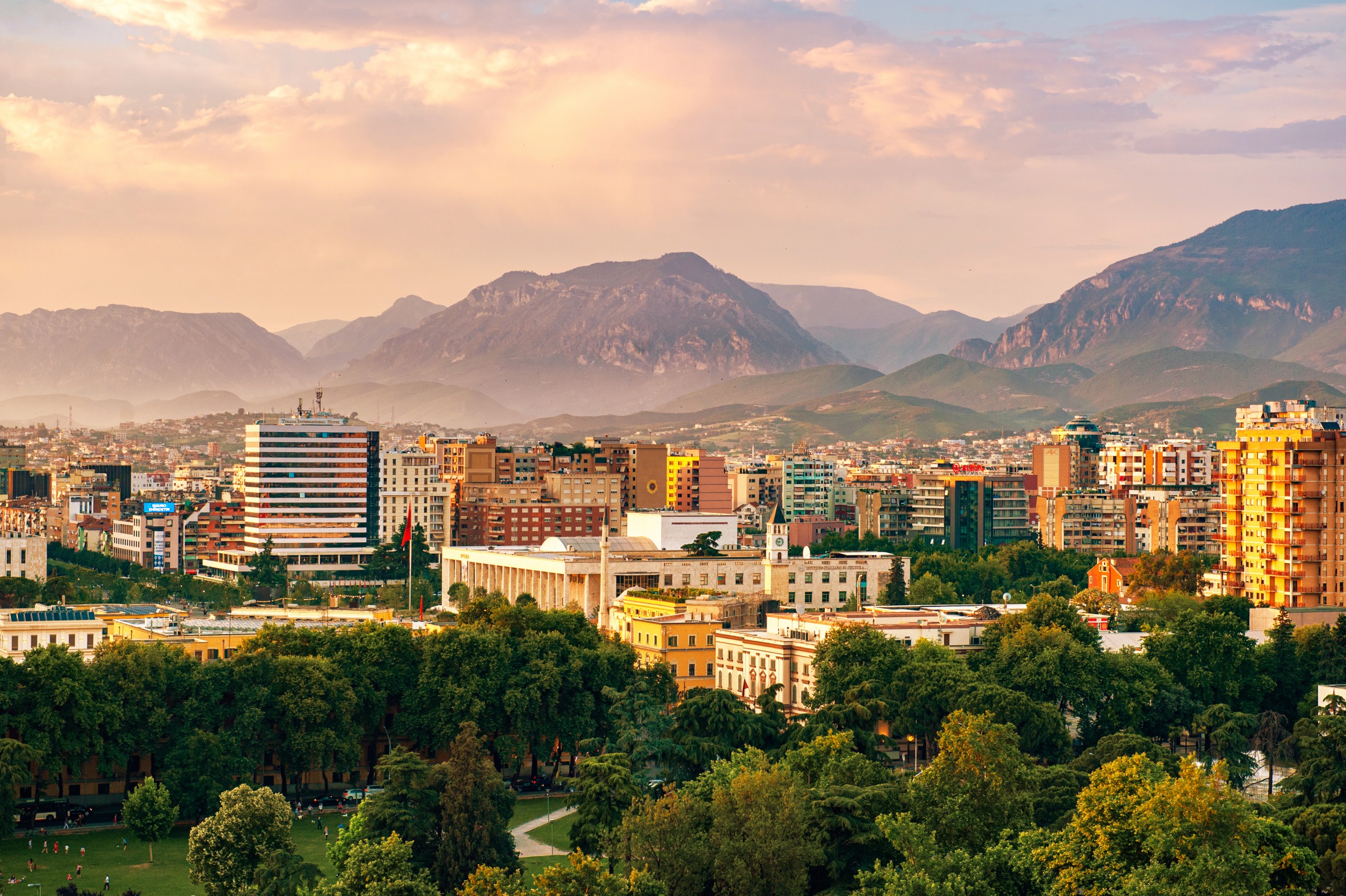
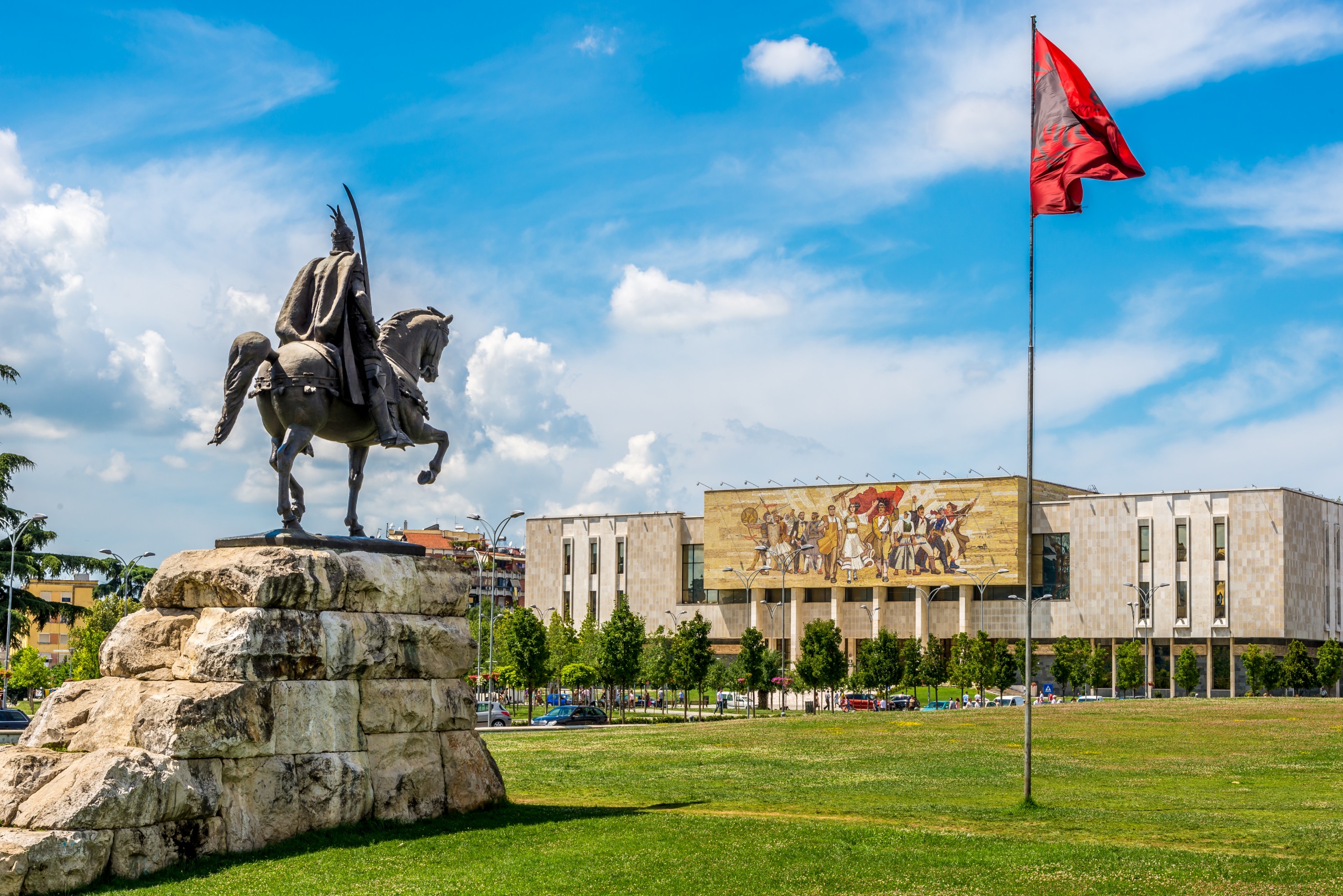
The nerve centre of Tirana, Skanderbeg Square brings together the statue of Albania's national hero, the Et'hem Bey Mosque, the National Museum of History and the Ottoman Clock Tower on a vast pedestrian esplanade redesigned in 2017.
At the heart of Tirana, Skanderbeg Square is the nerve centre of Albania's capital. A vast pedestrian esplanade redesigned in 2017, it brings together in one space the equestrian statue of the national hero, the Et'hem Bey Mosque, the National Museum of History and the Clock Tower. This is where the political, cultural and social pulse of the country beats.
Practical information at a glance
- Access: pedestrian square in the city centre, accessible on foot from all central districts of Tirana.
- Entry: free and open access to the square.
- Suggested duration: 30 to 60 minutes for the square alone; allow more time if visiting the surrounding monuments.
- Accessibility: flat paved surface, wheelchair accessible.
What to see
The equestrian statue of Gjergj Kastrioti Skanderbeg dominates the centre of the square. Cast in bronze, it depicts the 15th-century Albanian lord who resisted Ottoman expansion. Around it are arranged several major monuments: the Et'hem Bey Mosque (18th–19th century), the Ottoman Clock Tower, the National Museum of History with its grand mosaic façade, and the National Opera.
History and context
The square is named after Gjergj Kastrioti, known as Skanderbeg (1405–1468), the emblematic figure of Albanian resistance against the Ottomans. Under Enver Hoxha's communist regime, the square hosted large rallies of the Party of Labour. In January 1990, it witnessed the first pro-democracy demonstrations. Redesigned between 2015 and 2017, it has reclaimed its role as a pedestrian and civic space.
Highlights of your visit
The Skanderbeg statue
Inaugurated in 1968 for the 500th anniversary of the hero's death, the bronze statue is the work of Albanian sculptor Odhise Paskali. The goat-headed helmet, Skanderbeg's emblem, is immediately recognisable. It is the essential meeting point for Tiranans during national celebrations.
The Et'hem Bey Mosque
Built between 1789 and 1823, this Ottoman mosque is one of the few religious buildings spared by Hoxha's atheist campaign. Its interior frescoes depicting trees and waterfalls—unusual motifs in Islamic art—merit close attention. Entry is free outside prayer times.
The National Museum of History
Its façade is adorned with a monumental mosaic depicting the Albanian people through the ages. The museum traces the country's history from ancient Illyrian times to the present day. It is the largest museum institution in Albania.
The Clock Tower
Erected in the early 19th century during the Ottoman period, this ashlar stone tower stands in contrast to the modernist buildings surrounding it. It is one of the oldest monuments still standing in central Tirana.
Etiquette and visiting rules
To enter the Et'hem Bey Mosque, women must cover their head and shoulders; headscarves are usually available at the entrance. Shoes must be removed before entering. Avoid Friday prayer times for a peaceful visit. The square itself has no particular dress code.
Photography tips
Morning light is ideal for photographing the Skanderbeg statue with the mosque as a backdrop, before crowds arrive. In the evening, the square's artificial lighting creates a warm atmosphere. The National Museum's mosaic photographs best from the centre of the square in late afternoon when the façade is well lit. Photography is permitted outside the mosque; check the rules inside before shooting.
Location and access
Skanderbeg Square is located at the geographic centre of Tirana, at the intersection of the city's main thoroughfares. It is accessible on foot from most central hotels. Boulevard Dëshmorët e Kombit runs south towards the Great Forest Park. Tirana has no metro: city buses and taxi/Bolt services serve the adjacent streets. The square is entirely pedestrian and flat, making it accessible for people with reduced mobility.
Nearby
- Et'hem Bey Mosque — directly on the square, one of Tirana's rare preserved Ottoman buildings.
- National Museum of History — the country's largest historical collection, on the immediate edge of the square.
- Blloku district — former neighbourhood reserved for communist nomenclature, now bustling with cafés and shops, a few minutes' walk away.
- Bunk'Art 2 — museum housed in an underground atomic bunker, a short walk from the square.
- Great Forest Park (Parku i Madh) — green lung of Tirana, accessible along the main boulevard heading south.
Frequently asked questions
Yes, the square is a public space open permanently, with no opening hours or closures. It is lively throughout the year, with denser crowds on weekends and during Albanian national holidays.
Yes, the mosque is open to visitors outside prayer times. Proper dress required: shoulders and head covered for women, shoes to be removed at the entrance.
Allow 30 to 60 minutes for the square alone. Adding the Et'hem Bey Mosque and the National Museum of History, plan for a full half-day.
The square is the natural starting point for a day in Tirana. From there, walk to the Blloku district to the south, or to Bunk'Art 2 for a dive into Albanian communist history.
The surface is flat and paved with no major obstacles. The square is wheelchair accessible. Accessibility inside adjacent monuments may vary.
Spring (April–May) and autumn (September–October) offer pleasant temperatures for strolling. In summer, midday heat can be intense; favour morning or evening visits.
Nearby
Interested in this visit?
We can include it in your personalised itinerary.