Pëllumbas
Pëllumbas
Just 25 km from Tirana, Pëllumbas combines a prehistoric karst cave, a stone village, and a swimmable Erzeni canyon — a perfect day trip into nature.
About twenty kilometers southeast of Tirana, the village of Pëllumbas — literally "village of doves" in Albanian — serves as the gateway to exploring one of the country's most thoroughly documented karst caves. The site, framed by the foothills of the Dajti massif and the Skorana gorge, combines archaeological interest, mountain landscapes, and living rural traditions.
Why visit Pëllumbas
Pëllumbas brings together three points of interest rarely found in one place: a stone village faithful to traditional Albanian mountain architecture, a prehistoric cave designated as a natural monument, and a swimmable canyon in warm season. All of it remains accessible as a day trip from the capital, making it a popular choice for those wishing to escape Tirana without complicated logistics.
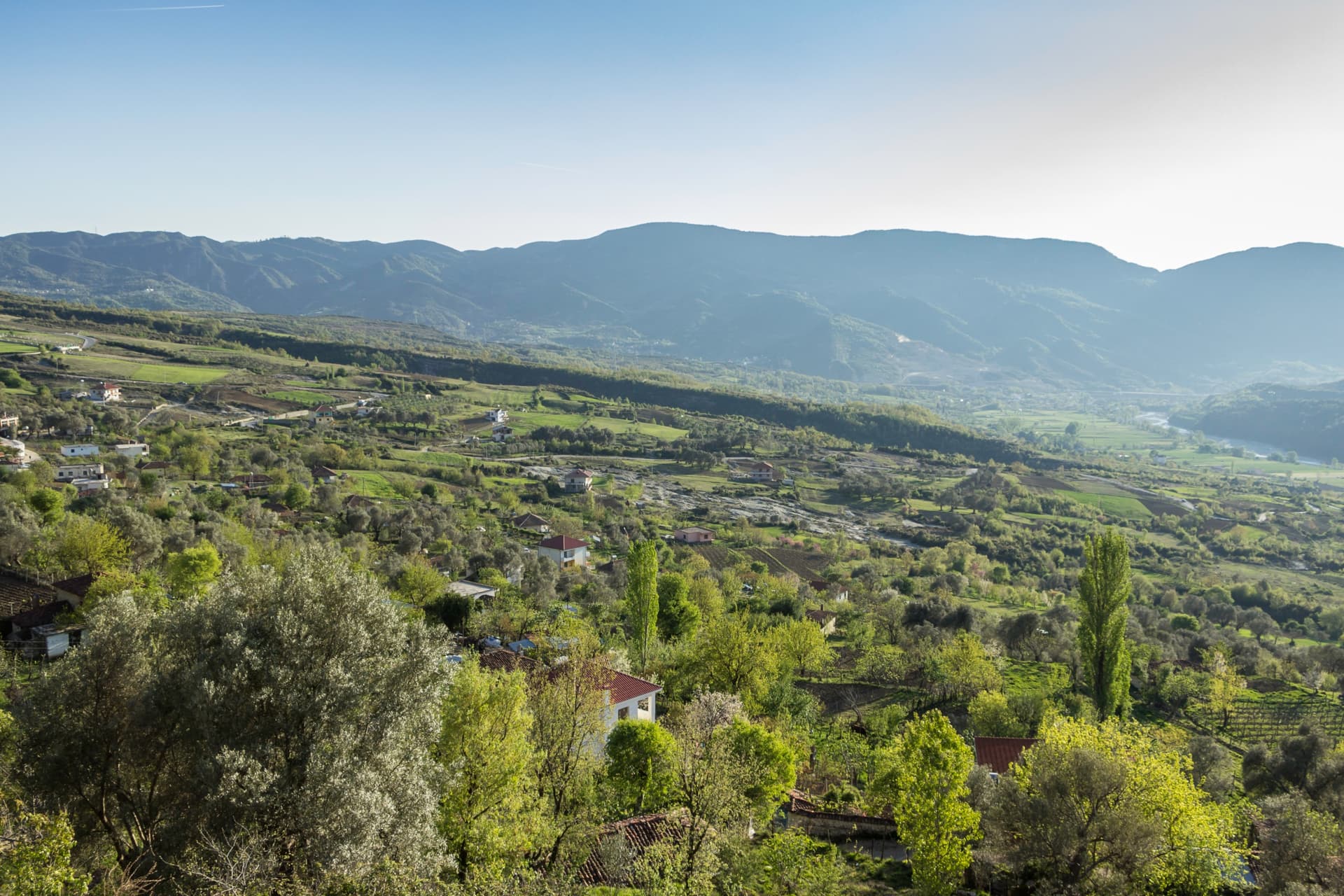
The village has preserved its stone and wood houses, complete with characteristic ornate wooden balconies. Pottery and basketry are still practiced here, and some residents display their work directly from their homes.
History and archaeology of the cave
The Pëllumbas cave, also called Shpella e Zezë ("black cave") or Shpella e Pëllumbasit, is one of Albanie's major prehistoric sites. Excavations have revealed human occupation dating back to the Middle Paleolithic, as well as artifacts from the Neolithic, Bronze Age, and Iron Age.
Before humans, the cavity sheltered cave bears (Ursus spelaeus), an extinct species whose presence is documented between 10,000 and 40,000 years before our era. More recently, during the two world wars, the cave remained discreet enough to serve as a refuge for villagers.
The Albanie Ministry of Environment declared it a natural monument of national and international importance, which now regulates visits and the site's conservation.
What there is to see
The cave and its dimensions
The cave is located 2 km from the village, within the Skorana gorge, accessible via a marked trail. Inside, the main corridor measures 70 to 80 meters long, 10 to 15 meters wide, and reaches 45 meters high in places. The gallery extends about 360 meters in total. Stalactites, stalagmites, and mineral deposits line the walls, and several bat species make their home here — which is why it's important to keep quiet and avoid using powerful flashlights.
The Erzeni canyon
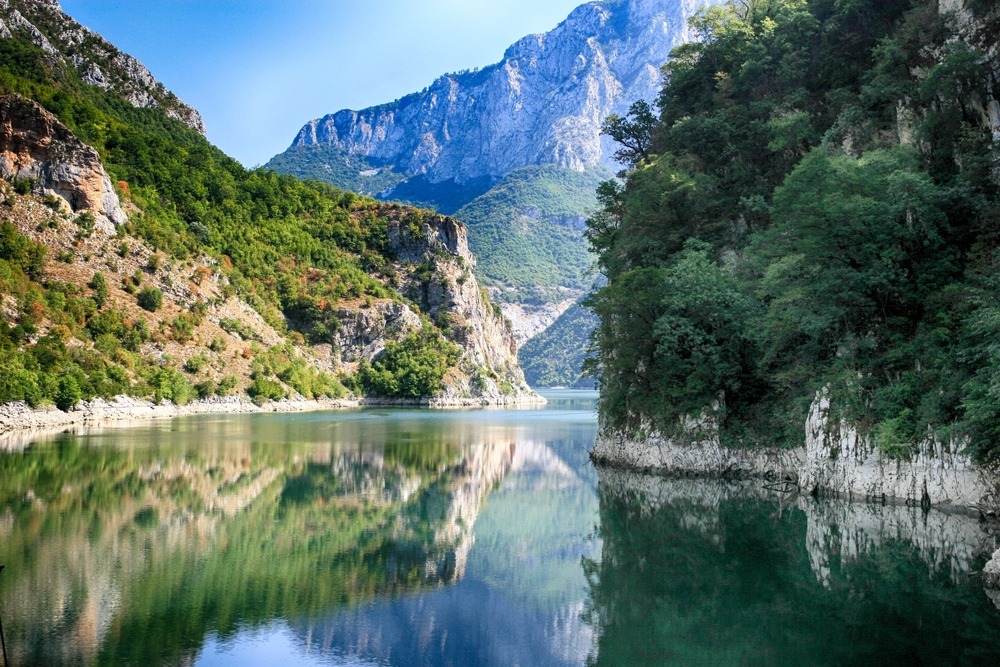
Below, the Erzeni river has carved out a canyon with a waterfall and natural pools where swimming is possible in summer. It's a natural extension of the cave visit for those with an extra half-day available.
The village and its specialties
A few families serve homemade meals. You'll find classics of interior Albanian cuisine: tave kosi (lamb cooked in yogurt), fërgesë (peppers, tomatoes, and melted cheese), spinach byrek, and rice-stuffed peppers. Locally produced wine, cheese, and honey often round out the table.
Practical information
- Visit duration: allow 3 to 4 hours for the cave round trip from the village (trail of approximately 1 to 1.5 hours each way).
- Equipment: closed hiking shoes essential, headlamp (the cave interior is in complete darkness), water, warm clothing — the temperature remains cool inside the cavity.
- Admission: modest entrance fee; local guides available at the trailhead for an additional fee.
- Level: rocky trail in places, moderate elevation gain, accessible to a reasonably fit hiker.
When to go
The most comfortable period runs from April to June, then September to October: mild temperatures, passable trails, vegetation at its best. Summer (July-August) is possible but hot on the approach; however, it's the only season when swimming in the Erzeni is truly pleasant. In winter, the trail can be muddy or slippery after rain, and certain bat colonies hibernate — another reason to keep quiet.
How to get there from Tirana
Pëllumbas is about 25 km southeast of Tirana. By car, allow approximately 45 minutes to 1 hour depending on traffic: take the highway toward Elbasan, exit toward Ibë, then follow the local road to the village. Minibuses (furgon) serve the area from Tirana, but their frequency is irregular and it's best to check the day before at the capital's transport terminals. Most visitors opt for a rental car or a driver transfer, which is more flexible for combining the cave and canyon in the same day.
What to combine in the region
- Tirana — the logical base for exploring Pëllumbas.
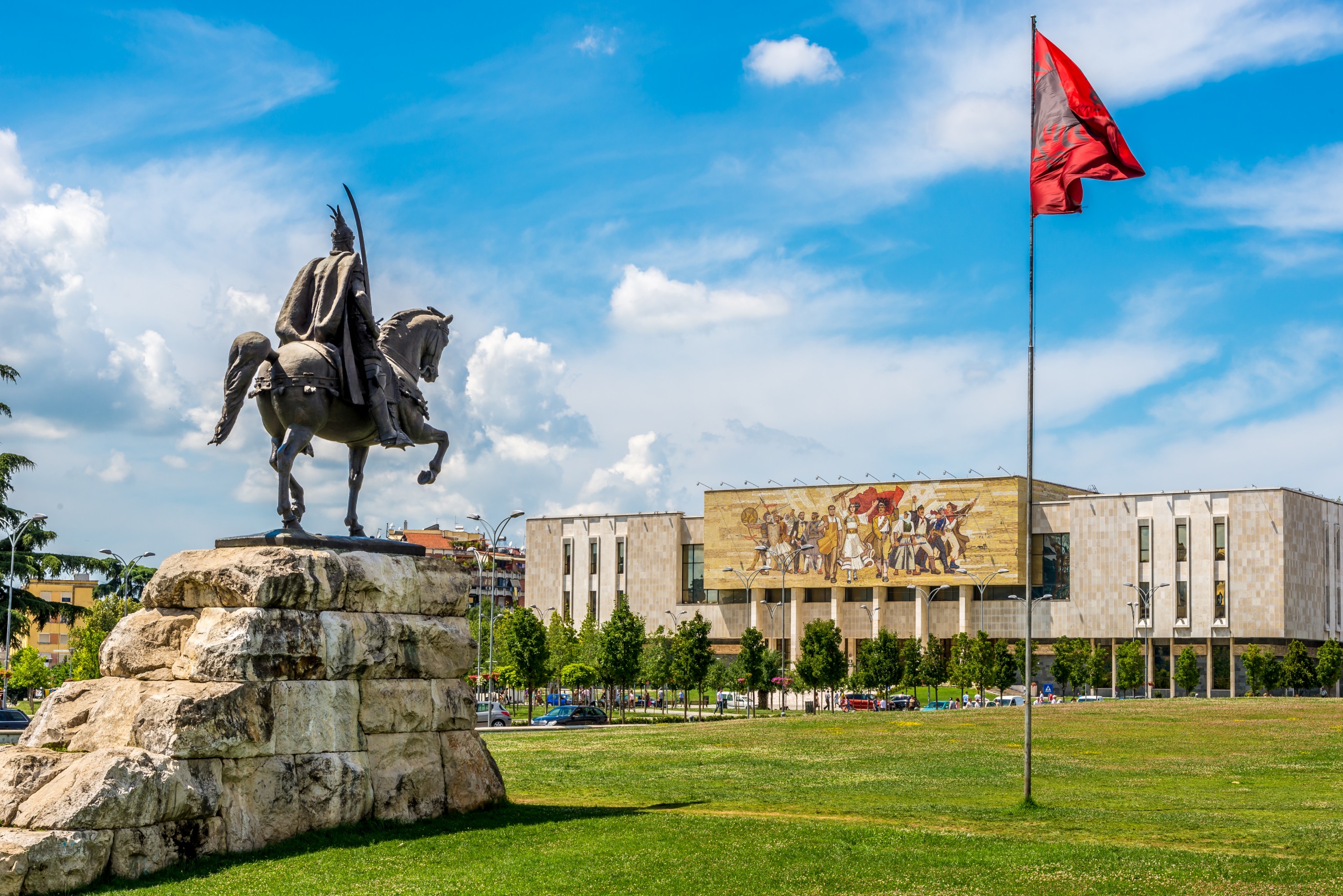
- National History Museum of Tirana — to place the cave's archaeological artifacts in the broader context of Albanie's prehistory.
- Krujë Castle — a historical stop approximately 1.5 hours to the north.
Frequently asked questions
Frequently asked questions
Planning your trip
Pëllumbas fits easily into an itinerary exploring central and southern Albanie. To build a coherent stay around Tirana, the Dajti massif, and beyond, consult our trips to Albanie.
Nearby
Interested in this visit?
We can include it in your personalised itinerary.