Skopje
Skopje
Skopje juxtaposes a 15th-century Ottoman bazaar, a medieval fortress and a controversial neoclassical center. Two to three days are enough to explore this history-rich Balkan capital.
Skopje, capital of North Macedonia, sits on the banks of the Vardar River at the heart of the Balkans. The city brings together a 15th-century Ottoman bazaar, a medieval fortress and a neoclassical downtown that emerged after 2010. This blend of historical layers and recent architectural ambitions makes it a Balkan destination in its own right.
Quick practical facts
Access: Skopje International Airport (SKP) about twenty kilometers from the center; bus and taxi connections.
Currency: Macedonian denar (MKD); cards accepted in most hotels and restaurants.
Language: Macedonian; English is widely spoken in the tourism sector.
Recommended duration: two to three days to cover the center, bazaar and surroundings.
Best time to visit: April–June and September–October for pleasant weather.
What to see
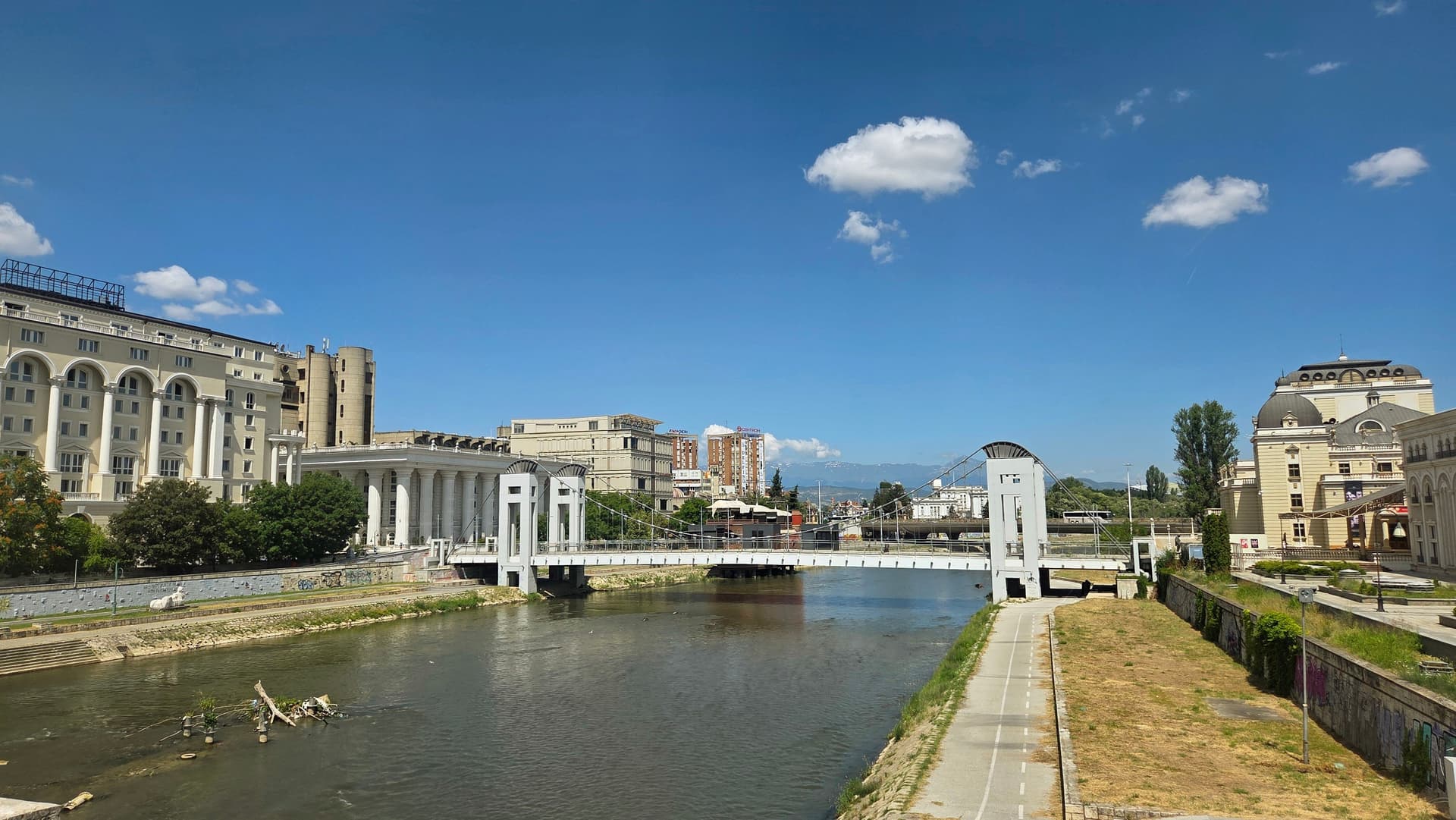
Skopje's center divides into two worlds separated by the Vardar. To the south, Macedonia Square and its monumental statues—including the Alexander the Great column—form the backdrop of the "Skopje 2014" project. To the north, the Old Bazaar (Čaršija) preserves its cobbled streets, mosques and Ottoman caravanserais intact for centuries.
The Kale Fortress overlooks the city from a rocky promontory. Its ramparts date partly from the Byzantine era, with Ottoman reconstructions. The Stone Bridge (Kameni Most), five centuries old, connects the two riverbanks and remains the city's most authentic architectural symbol.
History and context
Skopje has been inhabited since the Neolithic. A Roman city under the name Scupi, it became the capital of the medieval Serbian kingdom in the 14th century, then fell under Ottoman rule in 1392 for nearly five centuries. A devastating earthquake in 1963 destroyed much of the urban fabric; Soviet-modernist reconstruction then shaped the current center. The "Skopje 2014" project adds a new controversial baroque layer from 2010 onwards.
Highlights of a visit
The Old Bazaar (Čaršija)
One of the largest Ottoman bazaars in the Balkans after Istanbul's. Goldsmiths, copper merchants and traditional cafés coexist with art galleries. The Mustafa Pacha Mosque (1492) and the Bazaar Mosque (Bit Pazar Džamija) are worth a stop.
Kale Fortress
Accessible on foot from the bazaar, Kale offers a panoramic view over the Vardar and the city's rooftops. Archaeological excavations have uncovered Byzantine and Roman remains visible on site.
The Mother Teresa Memorial
Agnès Gonxha Bojaxhiu, known as Mother Teresa, was born in Skopje in 1910. The memorial erected in her honor in the downtown area traces her life through personal items and archival documents.
The Museum of Macedonia
Housed in a neoclassical building near the Stone Bridge, it presents archaeological collections spanning Macedonian prehistory, antiquity and the Middle Ages.
Etiquette and visit guidelines
In the bazaar's mosques, cover shoulders and knees; women should cover their heads.
Remove your shoes before entering prayer spaces.
Avoid visits during Friday prayer times.
Photography tips
Morning light is ideal on the Stone Bridge and Kale ramparts before crowds arrive. Sunset from the fortress colors the bazaar's rooftops orange. In mosques, ask permission before photographing the interior.
Location and access
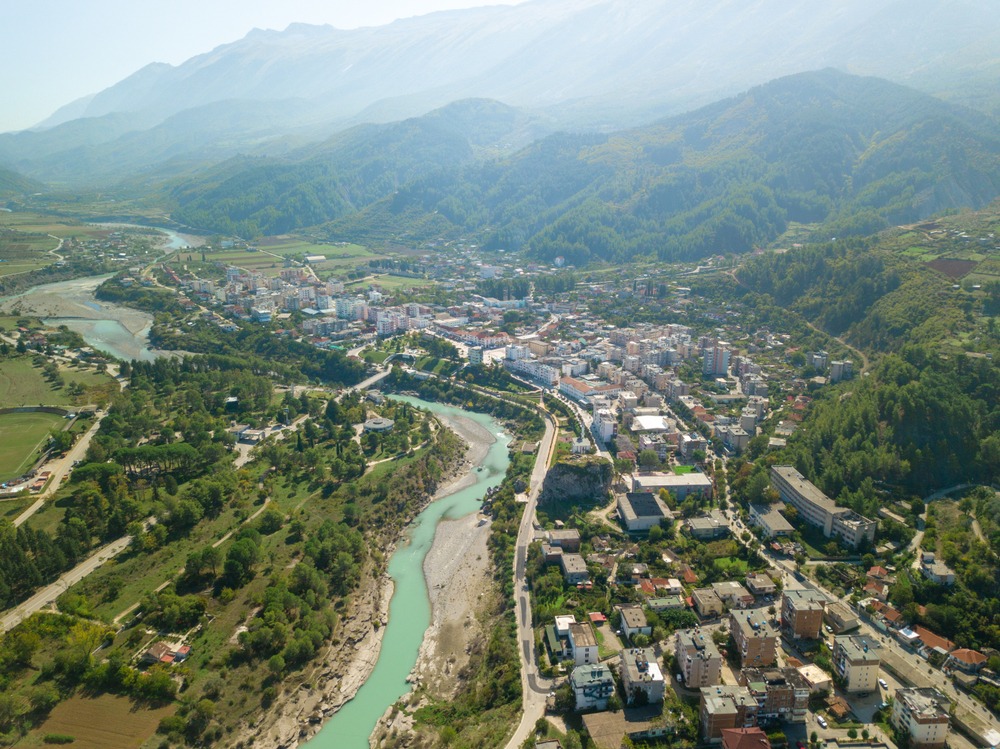
Skopje sits in the Vardar valley, surrounded by mountains. The historic center is compact and walkable. Urban buses and taxis serve outlying neighborhoods. The central train station connects Skopje to Belgrade, Thessaloniki and Pristina. Accessibility for people with reduced mobility remains limited in the Old Bazaar due to uneven cobbles.
Nearby
Matka Canyon — limestone gorges about fifteen kilometers west, with a lake, caves and Orthodox monasteries.
Nerezi Monastery — 12th-century Byzantine frescoes considered among the finest in the Balkans.
Mount Vodno — hiking or cable car up to the Millennium Cross with views over Skopje's plain.
Frequently asked questions
Spring (April–June) and autumn (September–October) offer pleasant temperatures and fewer tourists than summer. Summer can be very hot, regularly exceeding 35°C.
European Union nationals can enter without a visa with a valid ID card. Check conditions based on your nationality before departure.
Yes. Skopje is well connected to Pristina (Kosovo), Ohrid and Thessaloniki. A Balkan itinerary including these cities is feasible in one to two weeks.
The Čaršija is busy and generally safe during the day. As in any lively market, stay alert to your belongings in heavily trafficked areas.
Two days are sufficient for the center, bazaar and fortress. Add a third day if you want to include Matka Canyon or Mount Vodno.
It is generally tolerated outside. Inside, always ask permission from the caretaker or imam before taking out your camera.
Want to discover this destination?
Our local advisors design your tailor-made trip.