Ionian Riviera
120 kilometres of limestone coast between Llogara Pass and Butrint, with Greek-speaking villages, walk-accessible coves and Mediterranean cuisine.
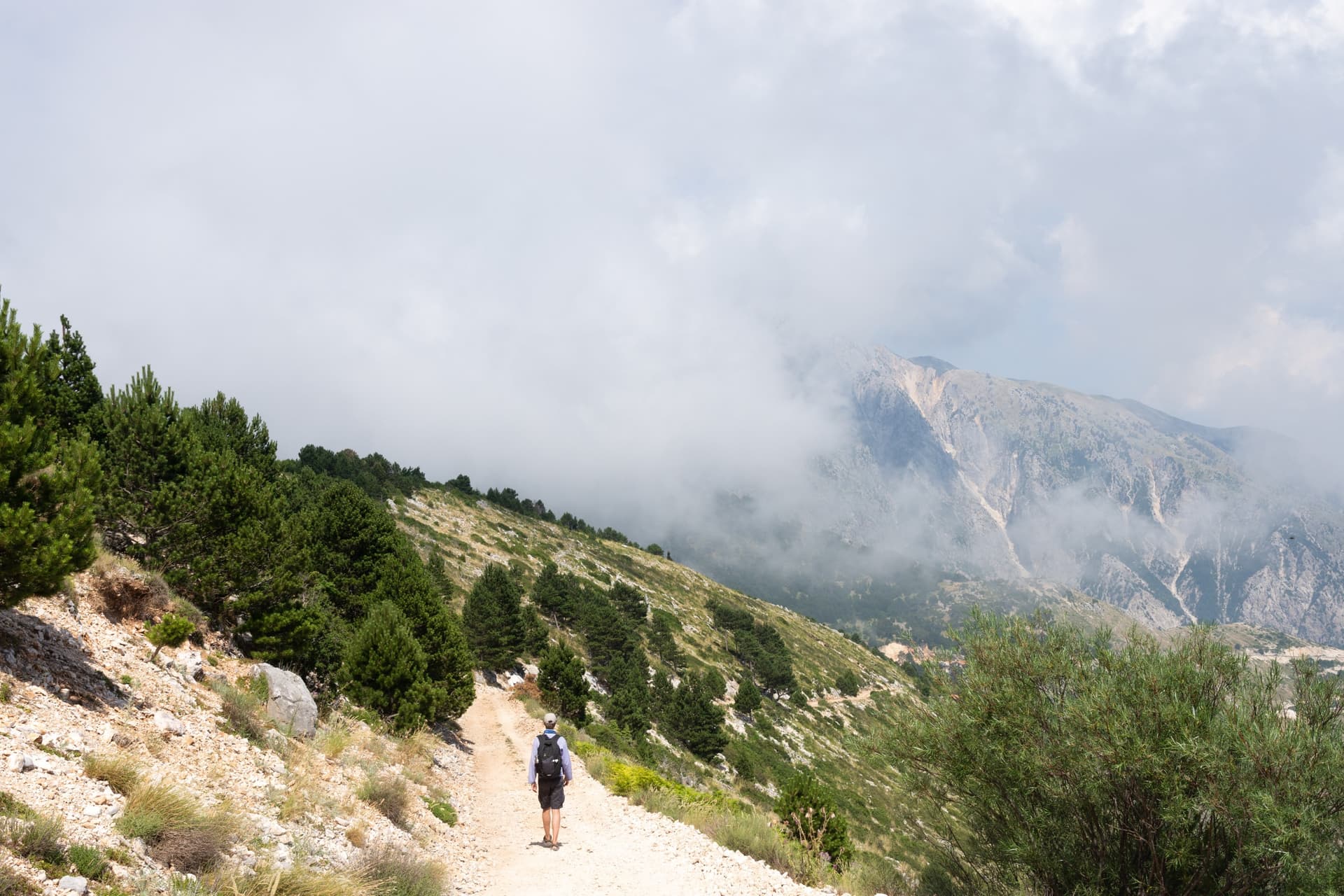
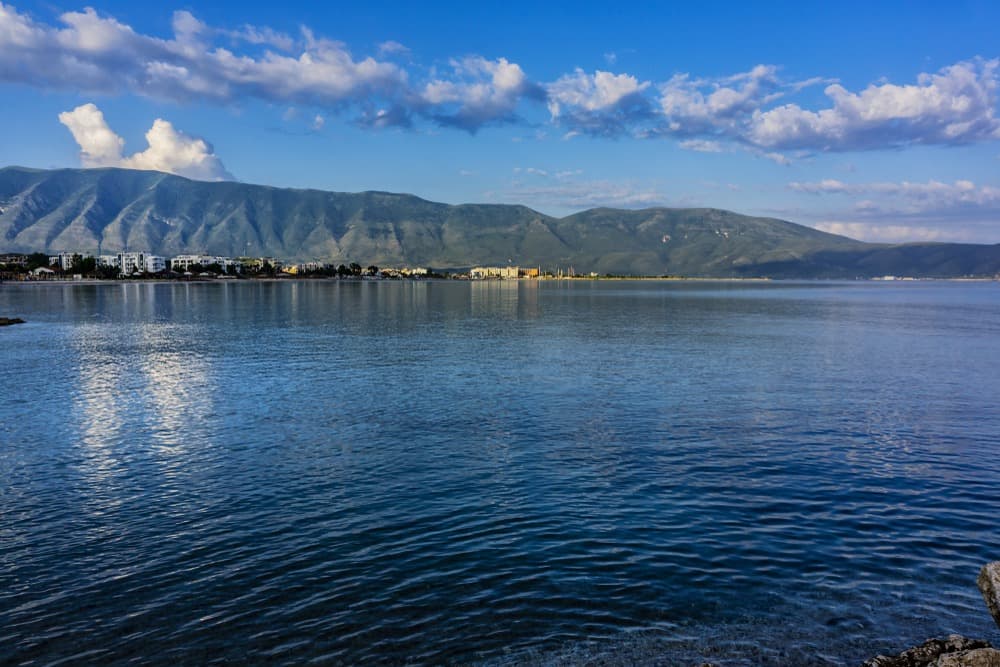
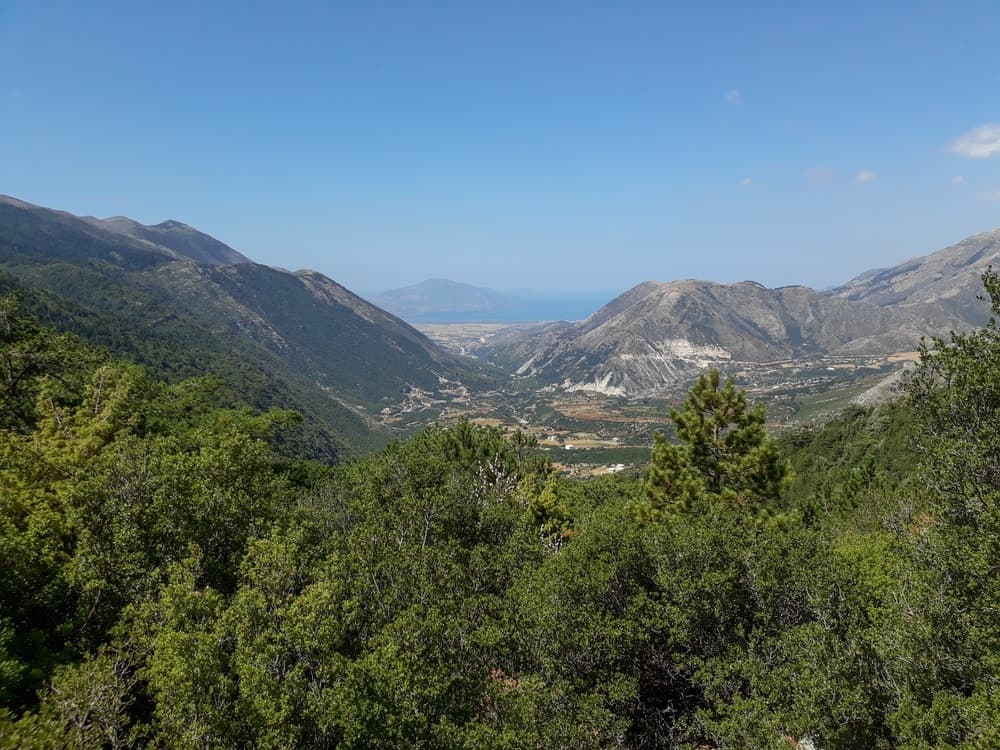
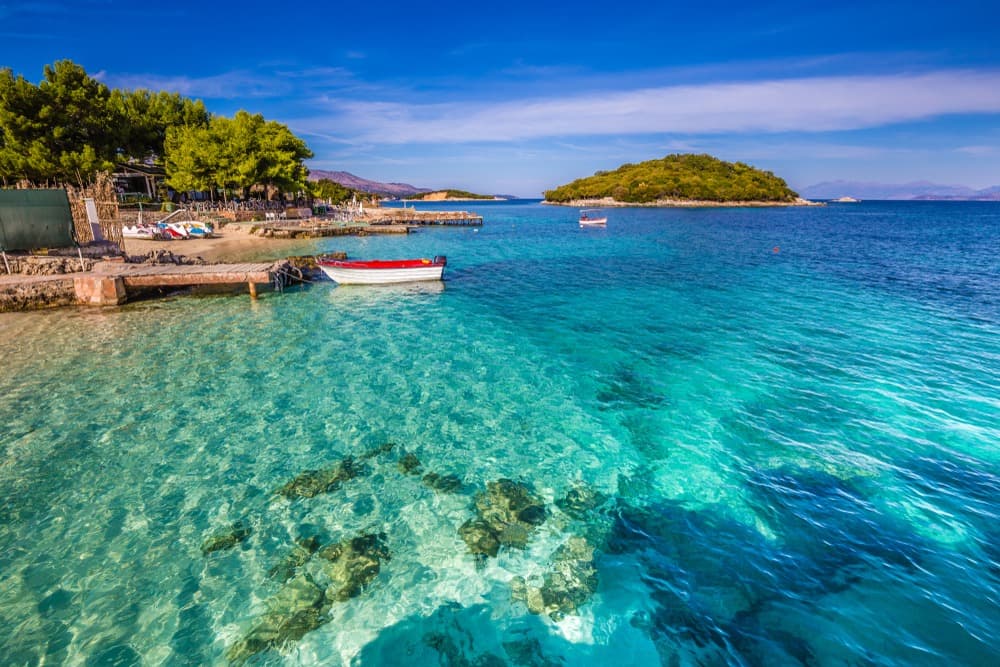
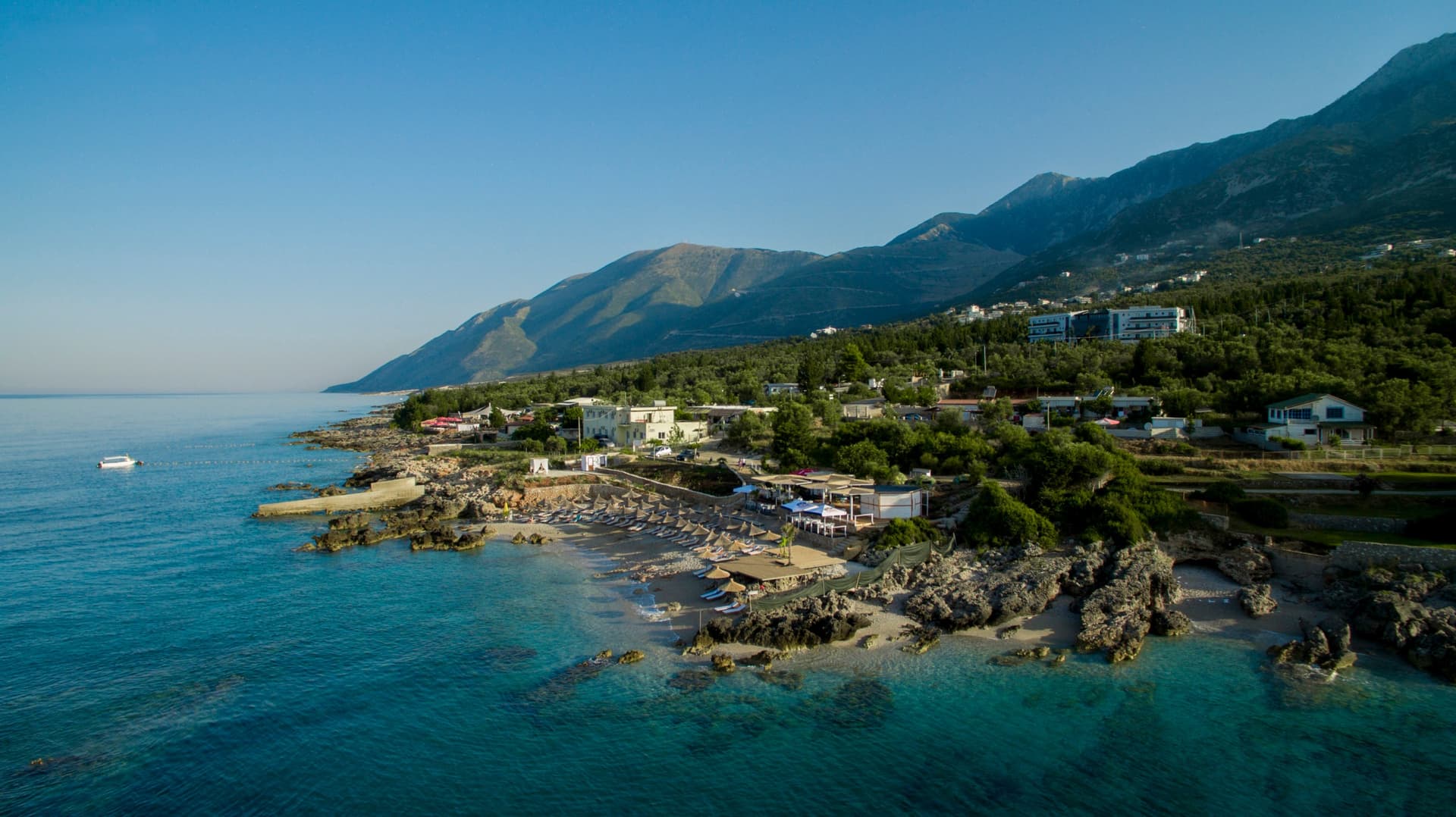
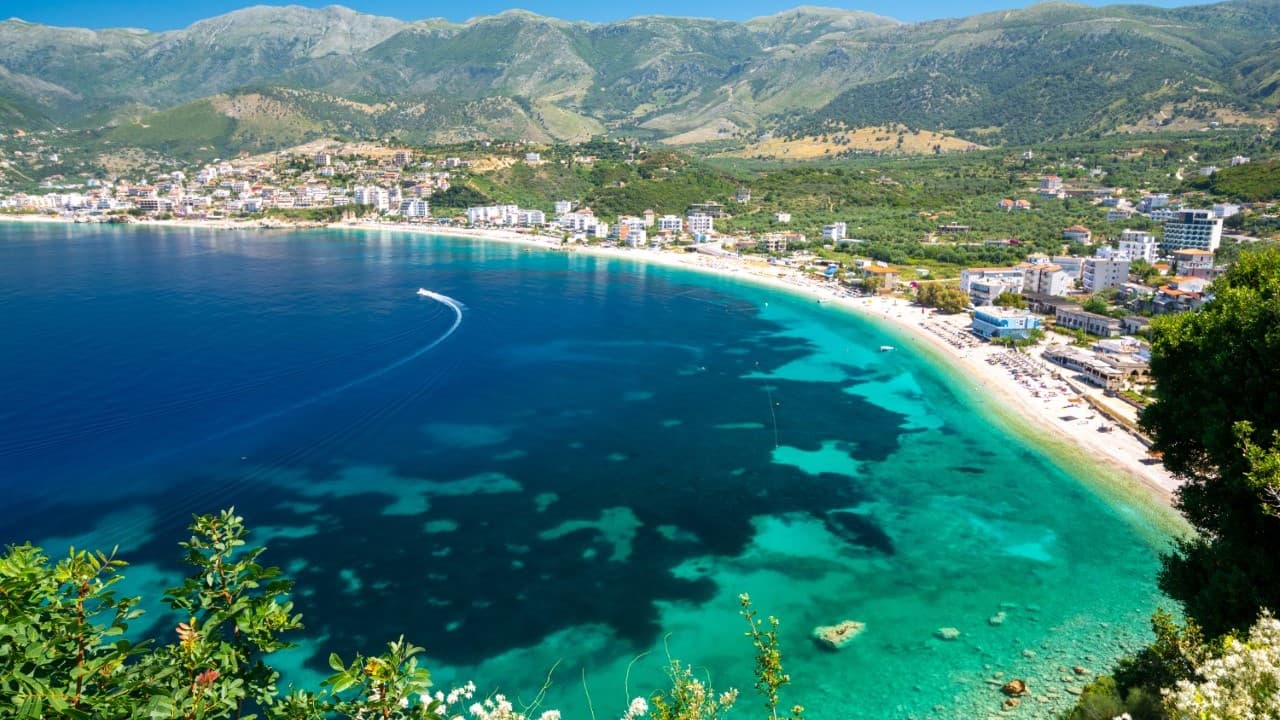
The Ionian Riviera occupies the southwestern fringe of the country, between Llogara Pass at 1,027 metres and the Greek border. You descend from the interior by crossing the last foothills of the Ceraunian Mountains, whose slopes plunge directly into a sea whose transparency owes to the limestone nature of the coastline and the absence of major coastal rivers. The SH8 national highway, open to the sea for nearly 120 kilometres, structures the entire region and determines travel times: allow 1 hour 30 minutes between Vlora and Sarandë out of season, sometimes double in July and August.
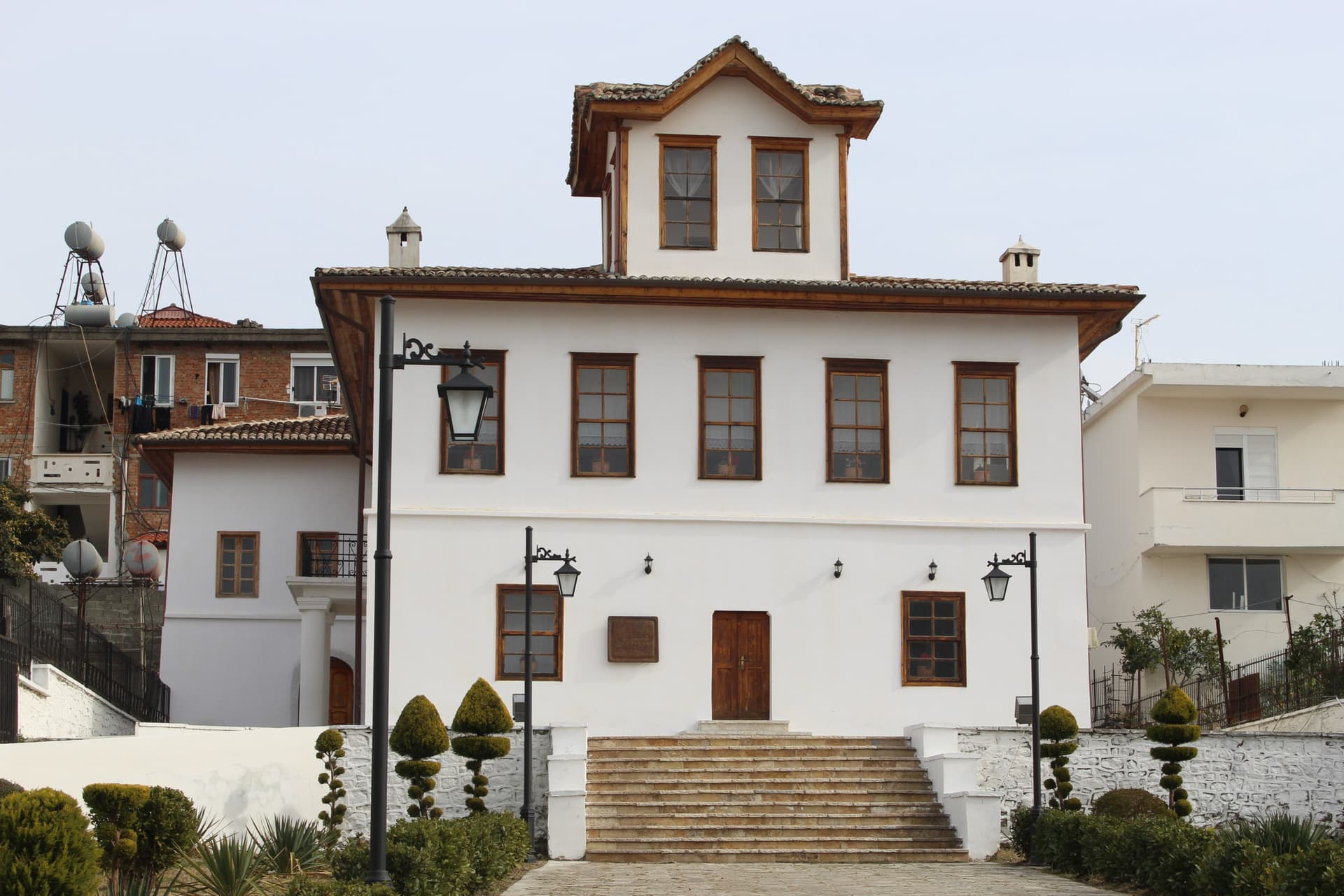
The coastal villages retain an identity distinct from the rest of Albanie. In Dhërmi, Himarë, Qeparo and Palasë, a Greek dialect is still spoken, a legacy of the Greek-speaking minority settled here since antiquity. The dry stone architecture, slate roofs and narrow streets of Old Qeparo or Vuno bear witness to urbanism adapted to the katabatic winds that descend from the Ceraunians in winter. Local cuisine blends these influences: tavë kosi with lamb and yoghurt, grilled octopus, goat feta from high pastures, olive oil from Borsh orchards, one of the country's largest olive groves.
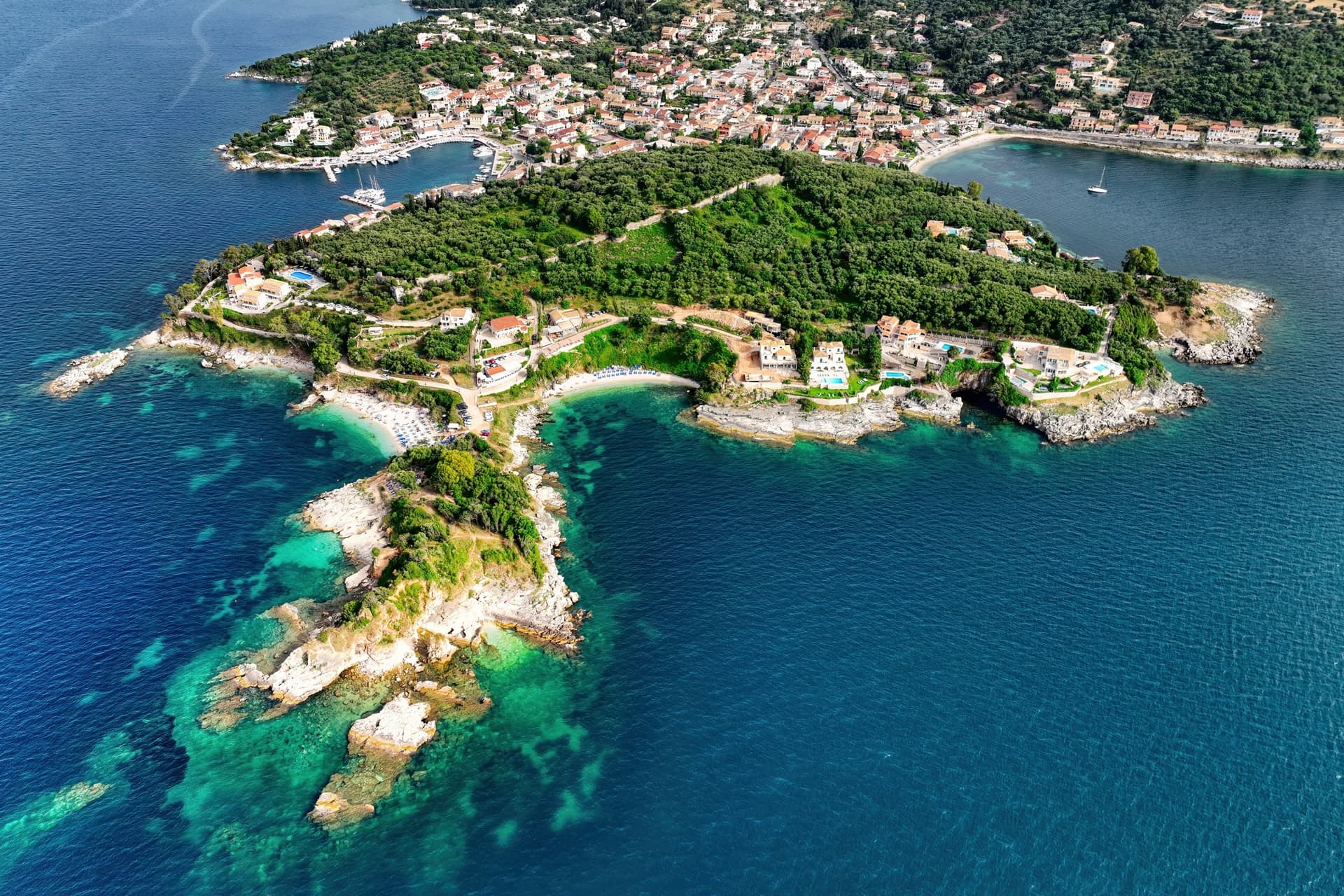
The geography offers a succession of coves separated by headlands. Gjipe, accessible by a 25-minute trail from the Monastery of Saint Theodore, marks the mouth of a canyon. Krorëz and Kakome, still minimally developed, require a 4x4 or boat access from Himarë. Further south, Porto Palermo shelters a fortress built around 1804 for Ali Pasha of Tepelena on a peninsula linked by a shingle bar. Ksamil closes the coast with an archipelago of four limestone islets accessible by swimming 150 metres from the shore.
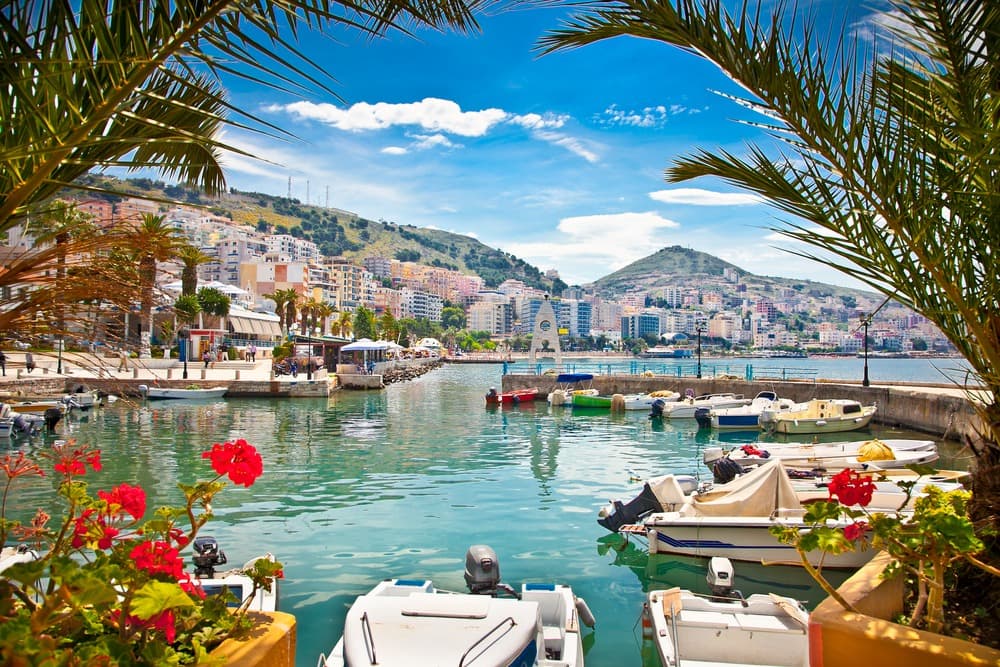
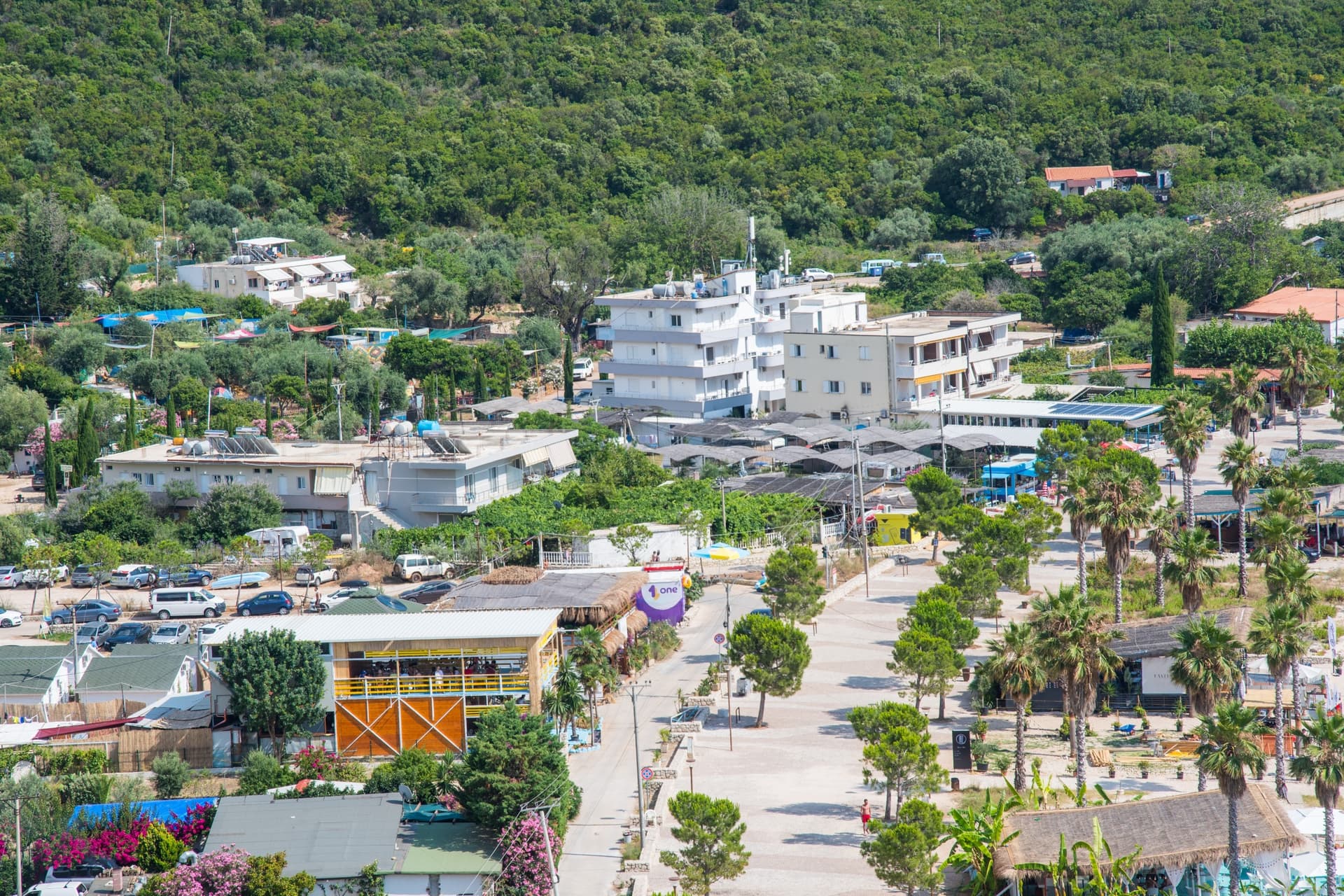
The local economy has long relied on emigration to Greece and Italy, and on coastal fishing. Tourism developed late, from the 2010s onwards, which explains the coexistence between hamlets preserved in the hills and a recently built coastal strip sometimes lacking overall planning. Our team in Tirana consistently favours accommodation located in historic villages rather than on recent seafronts, in Upper Dhërmi, Old Town Himarë or Qeparo.
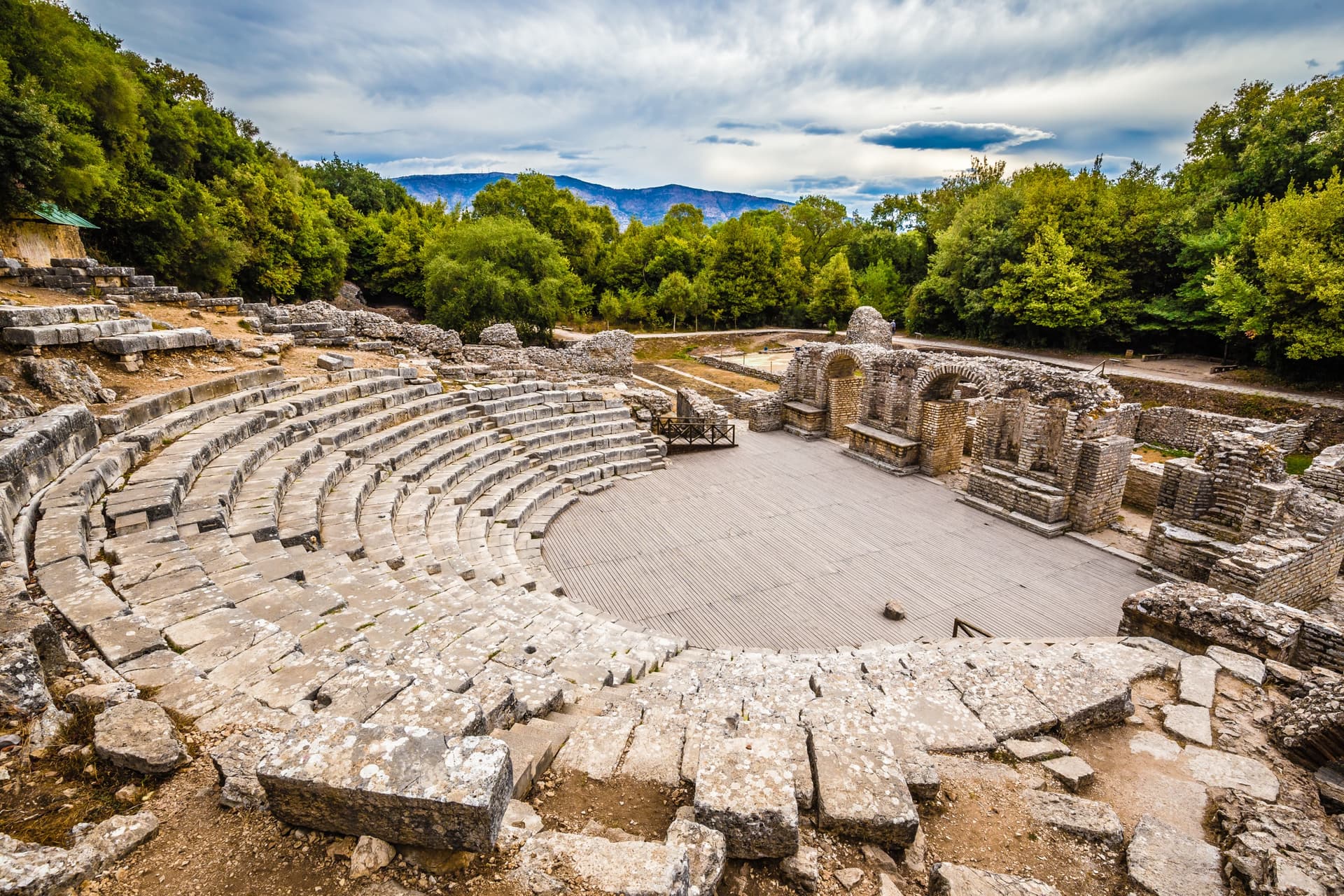
The hinterland deserves as much attention as the coast. The sources of Syri i Kaltër, the "Blue Eye", a karst resurgence 50 metres deep where water gushes at 18°C, are located 22 kilometres from Sarandë. The ancient site of Butrint, a UNESCO World Heritage site, preserves a 4th century BCE Greek theatre, Roman baths and a Early Christian baptistry with exceptional mosaics, all set within a lagoon where flamingos and herons breed. Inland, Llogara Pass provides access to its eponymous National Park, populated by Bosnian pines and frequented by chamois.
The Riviera is not an isolated beach destination but a geographical corridor that articulates sea, mountain and ancient heritage across a band 30 kilometres wide. This density justifies slow exploration rather than a simple beach stopover.
To discover
Llogara Pass and descent to Palasë. From 1,027 metres altitude, the road descends in about twenty switchbacks through the pine forest to the sea. Chamois can be observed at sunrise near the pass restaurant.
Gjipe Cove and its canyon. 25 minutes' walk from Saint Theodore Monastery leads to a white shingle beach bordered by the mouth of a canyon that can be followed on foot for two kilometres.
Butrint and Vivari Lagoon. Greco-Roman then Byzantine city on a wooded peninsula. The 6th-century baptistry preserves a 16-metre-diameter mosaic, normally protected under a layer of sand.
Old Qeparo in dry stone. Village abandoned in the 1960s then partially rehabilitated, perched 350 metres above the sea. Locals still serve fig raki and goat cheese from neighbouring herds.
Porto Palermo Fortress. Ali Pasha's triangular bastion on a shingle peninsula. The adjacent bay, still used by trawlers, allows swimming in water at 24°C in July.
When to visit
The useful season extends from mid-May to mid-October. June and September offer the best compromises: water between 22 and 24°C, daytime temperatures of 26 to 29°C, and far fewer visitors than July-August. In high season, temperatures rise to 32-34°C, the sea reaches 26°C, but coastal villages like Ksamil and Himarë become crowded and travel times on the SH8 double. April and October suit hiking and cultural visits (Butrint, nearby Gjirokastër), with daytime temperatures of 18-22°C and sea still cool at 17-19°C in April.
From November to March, most coastal accommodation closes, rainfall is significant (up to 180 mm in November in Sarandë) and Llogara Pass may be snow-covered. This period suits only a quick passage from Gjirokastër to visit Butrint, accessible year-round.
Practical advice
We recommend 4 to 6 days on the Riviera to properly absorb the diversity of the coastline and its hinterland. Less than 3 days forces a choice between the northern half (Dhërmi, Himarë, Porto Palermo) and the southern half (Sarandë, Ksamil, Butrint), separated by about 80 kilometres of winding road. The most common logistics entry point remains Tirana, 4 hours' drive via Vlora, but Corfu airport in Greece, connected to Sarandë by a 30-minute ferry, offers a relevant alternative for stays concentrated in the south.
The Riviera naturally combines with Berat and Gjirokastër, whose listed Ottoman centres are 1 hour 30 minutes and 1 hour from the coast respectively, as well as with Tirana for entry and exit. Association with the Albanian Alps to the north requires at least 12 days total given distances. Hotel comfort is adequate in historic villages and Sarandë, more uneven in recently urbanised coastal zones. The region suits couples and families seeking a balance between swimming, moderate hiking and heritage, less so demanding hikers who will find their satisfaction in the Northern Alps.