Vlorë
Vlorë
Vlorë blends national history, Ottoman architecture and direct access to the Albanian Riviera. It was here in 1912 that Albanian independence was proclaimed, on a bay where the Adriatic and Ionian seas converge.
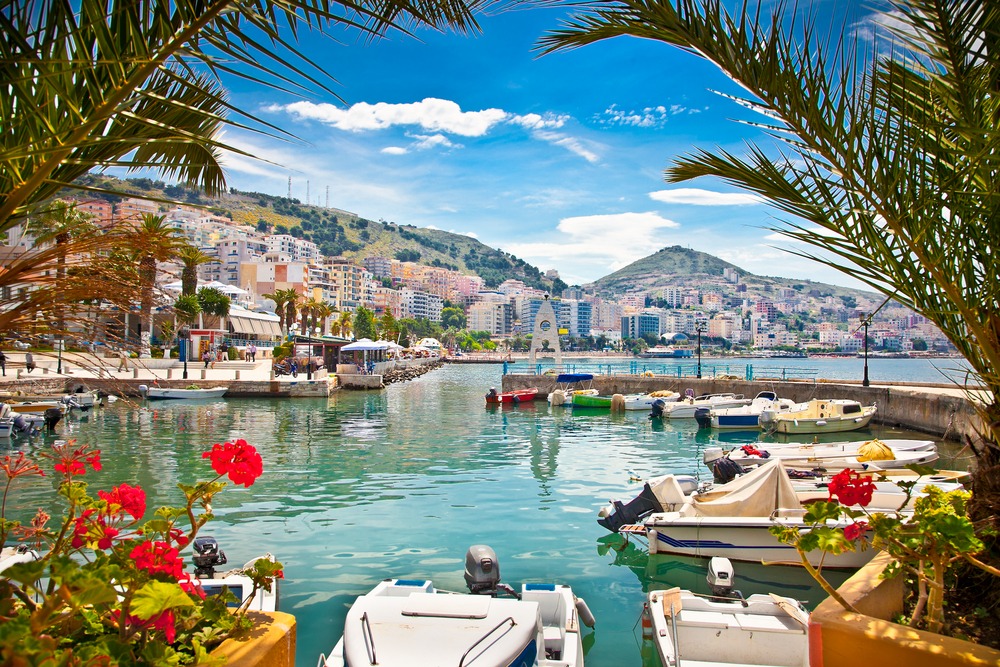
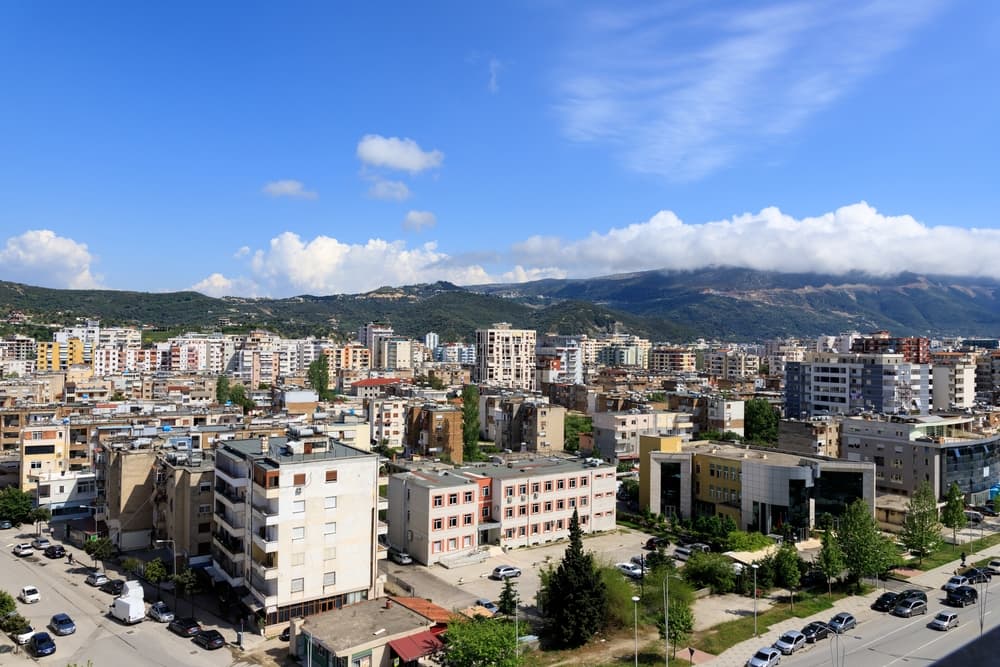
Vlorë is Albanie's second major port city, situated at the mouth of the bay that bears its name, where the Adriatic Sea meets the Ionian Sea. A historic crossroads between East and West, it witnessed the proclamation of Albanian independence in 1912. Today, it combines a lively waterfront, mountainous hinterland and direct access to the Albanian Riviera, making it a solid base for exploring the country's south.
Practical Information at a Glance
- Access: Regular buses from Tirana (approximately 2.5–3 hours) and Gjirokastër; no active railway station.
- Recommended duration: 1 to 2 days for the city, longer if you venture to the Riviera.
- Best time to visit: May–June and September–October to avoid summer crowds and intense heat.
- Dress code: Casual in town; cover shoulders when visiting mosques.
What to See
The heart of Vlorë revolves around Flag Square (Sheshi i Flamurit), dominated by a statue of Ismail Qemali, father of Albanian independence. The Independence Museum traces the 1912 proclamation in the very house where it was signed. The waterfront (Lungomare) stretches several kilometres with promenades, cafés and urban beaches. The Muradiye Mosque, built in the 16th century under Suleiman the Magnificent, is one of the city's best-preserved Ottoman monuments.
History and Context
Founded by the Greeks as Aulon, the city passed successively under Roman, Byzantine, Norman and Ottoman rule. It was here that on 28 November 1912, Ismail Qemali raised the flag bearing the double-headed eagle and proclaimed Albanian independence. During the Cold War, the bay of Vlorë housed a Soviet submarine base, whose underground remains are today partially open to the public at Pashaliman.
Highlights of Your Visit
Flag Square and the Independence Museum
The house of Ismail Qemali, now a museum, preserves original documents, portraits and objects linked to the 1912 proclamation. The adjacent square is the city's natural gathering point, lively in the evening.
Muradiye Mosque
Built in the 16th century, this single-domed mosque is a sober and elegant example of provincial Ottoman architecture. The simply decorated interior merits a brief visit.
Pashaliman Submarine Base
Carved into rock during the communist period to house Soviet submarines, this once-classified installation has become an unusual tourist site. Access is from Porto Palermo village or via the coastal road.
The Lungomare and the Bay
The waterfront offers clear views over the bay and, on clear days, toward Cape Karaburun. Urban beaches are busy in summer; off-season, the promenade is nearly empty and pleasant.
Etiquette and Visiting Rules
- At Muradiye Mosque: remove your shoes before entering, cover shoulders and knees.
- Avoid visits during Friday prayer times.
- At the Independence Museum: photography is generally permitted in common areas; ask on-site for display cases.
Photography Tips
Golden evening light falls directly across the bay from the Lungomare: the best time to photograph the horizon and boats. Flag Square is most photogenic early morning before crowds arrive. For Muradiye Mosque, late-morning light illuminates the white façade beautifully.
Location and Access
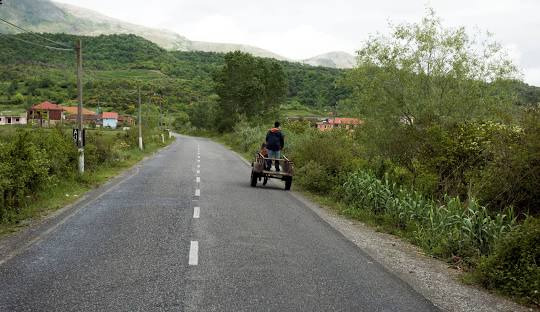
Vlorë lies in south-western Albanie, approximately 150 km from Tirana via the SH4 national road. Frequent buses connect the city to the capital, Gjirokastër and Sarandë. The coastal road south (SH8) hugs the Albanian Riviera and passes through Himarë. The city centre is compact and walkable. Accessibility for visitors with reduced mobility is limited on older pavements, but the Lungomare is largely flat.
Nearby
- Karaburun-Sazan Marine Park — wild peninsula and reconverted military island, accessible by boat excursion from Vlorë.
- Himarë — Greek-Albanian coastal village with beaches and perched old town, roughly 60 km south.
- Llogaraja Pass and National Park — black pine forest above 1,000 m altitude, sweeping views over the Riviera.
- Apollonia — partially excavated ancient Greek city, about thirty kilometres to the north-east.
- Porto Palermo — Ali Pasha castle on a promontory, midway toward Himarë.
Frequently asked questions
May–June and September–October offer a good balance: swimmable sea, manageable heat and fewer tourists than July–August.
Yes, the site is open to visitors. Access is via the coastal road; local guides offer organised tours from Vlorë or Himarë.
Buses depart regularly from Tirana's bus station. The journey takes approximately 2.5 to 3 hours depending on traffic. No active railway connection exists.
Yes. The coastal road SH8 departs from Vlorë and serves Llogaraja, Himarë, Porto Palermo and Sarandë. Renting a car makes island-hopping easier.
Generally yes, outside prayer times. Respect dress codes (shoulders and knees covered, shoes removed at the entrance).
One day is sufficient for the main city sites. Allow two days if you wish to add an excursion to Apollonia or the Karaburun-Sazan marine park.
Want to discover this destination?
Our local advisors design your tailor-made trip.