Apollonia of Illyria
Apollonia of Illyria
Just 15 km from Fier, Apollonia of Illyria reveals its Greek ruins amid olive groves: a major archaeological site in authentic Albania.
An ancient Greek city founded in Illyria, Apollonia ranks among Albania's most remarkable archaeological sites. Located near the village of Pojani, it played a key role in the cultural and commercial exchanges of the ancient Mediterranean. Today, its remains, preserved within an archaeological park, offer visitors an exceptional natural setting and a fascinating journey through history.
The History of Apollonia
The site of Apollonia was rediscovered in the 18th century, but it was only after Austrian excavations during World War I (1916–1918) that it began to reveal its potential. Between 1924 and 1938, a French mission led by Léon Rey uncovered numerous remains. However, due to lack of funding, a museum took time to materialize. Objects discovered were exhibited in Vlora in 1936, but during World War II, these collections were damaged and looted. After 1948, Albanian archaeologists resumed excavations, and a museum was inaugurated in 1958. Although the site suffered during the communist period, it gained new momentum after 1992 thanks to international excavations. The museum, closed for two decades, reopened in 2011 with UNESCO support, becoming a major cultural center in Albania.
The Treasures of Apollonia
The archaeological site of Apollonia is an essential destination for history and nature enthusiasts. Set within a Mediterranean landscape, this site is brimming with impressive remains testifying to the grandeur of this ancient Greek city. Here are the main sites to discover during your visit:
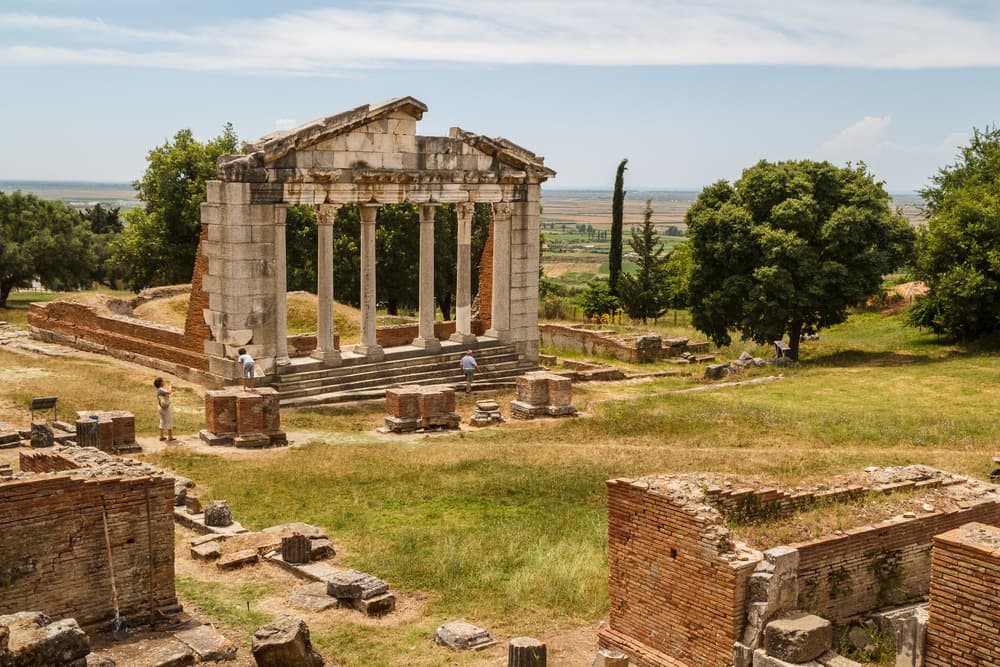
- The Bouleuterion: This well-preserved building served as the seat of the city council. Its columns and tiers bear witness to the importance of public debate and democracy in the ancient city.
- The Ancient Theatre: Capable of accommodating up to 10,000 spectators, this theatre served both political and artistic events. The view from its stands over the surrounding hills is breathtaking.
- The Saint Mary Monastery (Shën Mëri): A Byzantine monastery built atop ancient ruins, now housing an archaeological museum displaying artifacts discovered at Apollonia.
- The Roman Forum: The former commercial and political heart of the city, with remnants of columns and temples standing as impressive witnesses to the city's former glory.
- The City Walls: Imposing walls once surrounded Apollonia for protection. Some sections remain visible, offering a fascinating glimpse into ancient defensive techniques.
- Mosaics and Frescoes: Restored mosaics and frescoes reveal the cultural wealth of the city at its height.
- Other Treasures Not to Miss
- The Odeon, a small performance venue dedicated to musical and literary representations.
- The Stoa, a monumental portico stretching 75 metres, marked by a series of sculpted niches.
- The Temples, Nymphaeum and Gymnasium, which demonstrate the importance of religion and sport in the ancient city.
- The Monastery of the Dormition of the Virgin, adorned with 13th-century Byzantine frescoes and housing a small archaeological museum.
Finally, to extend your experience, a break at the Leon Rey bar-restaurant, housed in the home of the archaeologist who rediscovered Apollonia, is ideal for savouring local specialities while immersing yourself in the site's history.
Unforgettable Experiences at Apollonia
Apollonia offers a multitude of activities to enrich your visit. Here are some must-do activities.
- Guided tour of the ancient site: Immerse yourself in Apollonia's history by following a local guide who will reveal the secrets of this ancient city.
- Panoramic hikes: Explore the surrounding hills and vast plains, and enjoy breathtaking views over the Myzeqe plain and the Vjosa river.
- Photography exploration: Apollonia is a paradise for photographers, with its authentic ancient ruins, landscapes and spectacular sunsets.
- Discovery of the archaeological museum: Visit the museum housed in a former monastery and admire artifacts from local excavations, revealing the city's history.
- Culinary breaks in local restaurants: After your exploration, taste local specialities in nearby restaurants, such as tave kosi (lamb in yoghurt sauce) or byrek, a flaky pastry pie.
When to Visit?
Spring (April–June) and autumn (September–October) are perfect times to visit Apollonia, with moderate temperatures making the site's discovery more pleasant. Although summer can be hot, mornings and evenings remain ideal for enjoying the location.
To reach Apollonia, you will need to pass through the city of Fier. Here's how to get there:
By furgon (shared minibus)
- From Durrës: 200 lek, approximately 1 hour 30 minutes travel.
- From Tirana: 400 lek, approximately 2 hours travel.
- From Berat: 300 lek, approximately 1 hour travel.
- From Vlora: 200 lek, approximately 45 minutes travel.
- From Fier, take a furgon for the remaining 15 km (from 50 lek).
By taxi
- From Fier: A taxi ride costs approximately 500 lek.
By car or motorbike
- Durrës to Apollonia: approximately 2 hours travel.
- Route: Take the SH85 towards Kavajë, then continue on the SH4 towards Fier.
Admission Fees and Opening Hours
- Admission fee: 400 lek
- Opening hours:
- 8am to 7pm (April to September)
- 9am to 5pm (October to March)
Want to discover this destination?
Our local advisors design your tailor-made trip.