Mavrovo National Park
Mavrovo National Park
North Macedonia's largest protected area, Mavrovo Park combines Mount Korab, medieval monasteries, a reservoir lake and mountain villages.
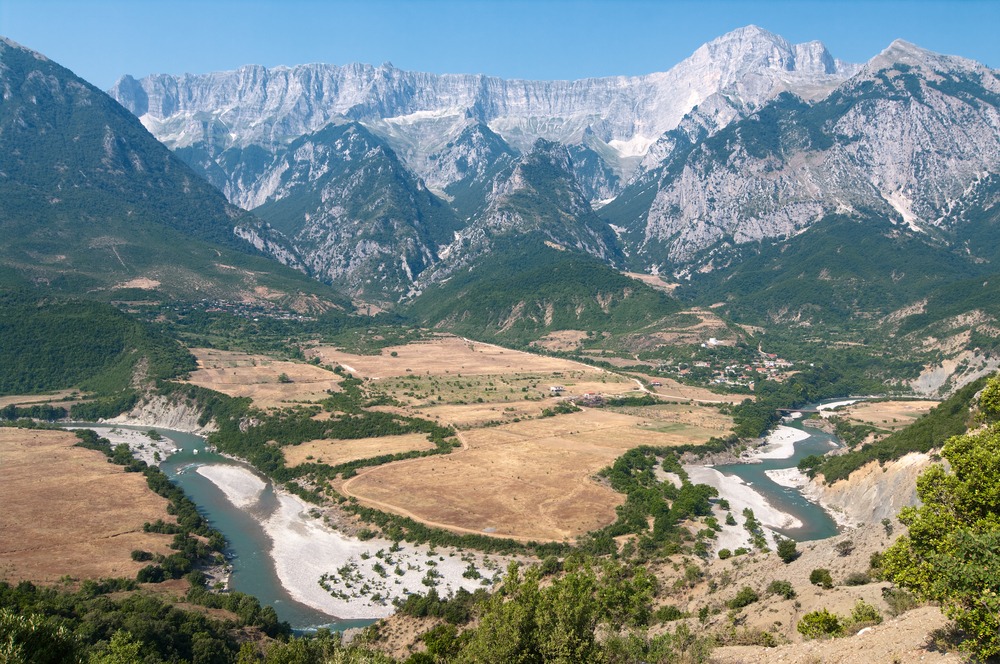
Mavrovo National Park is located in North Macedonia, approximately one hour's drive west of Skopje, the capital. Spanning 730.88 km², it is the country's largest protected area, ahead of Pelister and Galicica. Beech forests, peaks exceeding 2,000 metres, an artificial lake, Orthodox monasteries and mountain villages compose a densely layered landscape straddling both built heritage and preserved natural environments.
Why visit Mavrovo National Park
The park concentrates, within a single perimeter, what North Macedonia offers most distinctively: high mountains, dense biodiversity, medieval monasteries and inhabited traditional villages. Mount Korab rises to 2,764 metres here, making it the country's highest point. The Mavrovo ski resort and the reservoir lake make it accessible in every season, without tipping into mass tourism. It is hiking and cultural discovery terrain that complements well an itinerary between Skopje and Ohrid.
History and protection status
The park was established in 1949 by a law of the Macedonian National Assembly. The legal framework was later revised to strengthen site protection and clarify its zoning. Three types of zones coexist today:
- strict nature reserves, closed or heavily regulated,
- managed reserves, where certain activities are controlled,
- a tourist zone, which groups villages, marked trails and visitor facilities.
This organisation explains why visitor numbers and permitted activities vary significantly from one sector to another.
What to see in the park
Mountains, fauna and flora
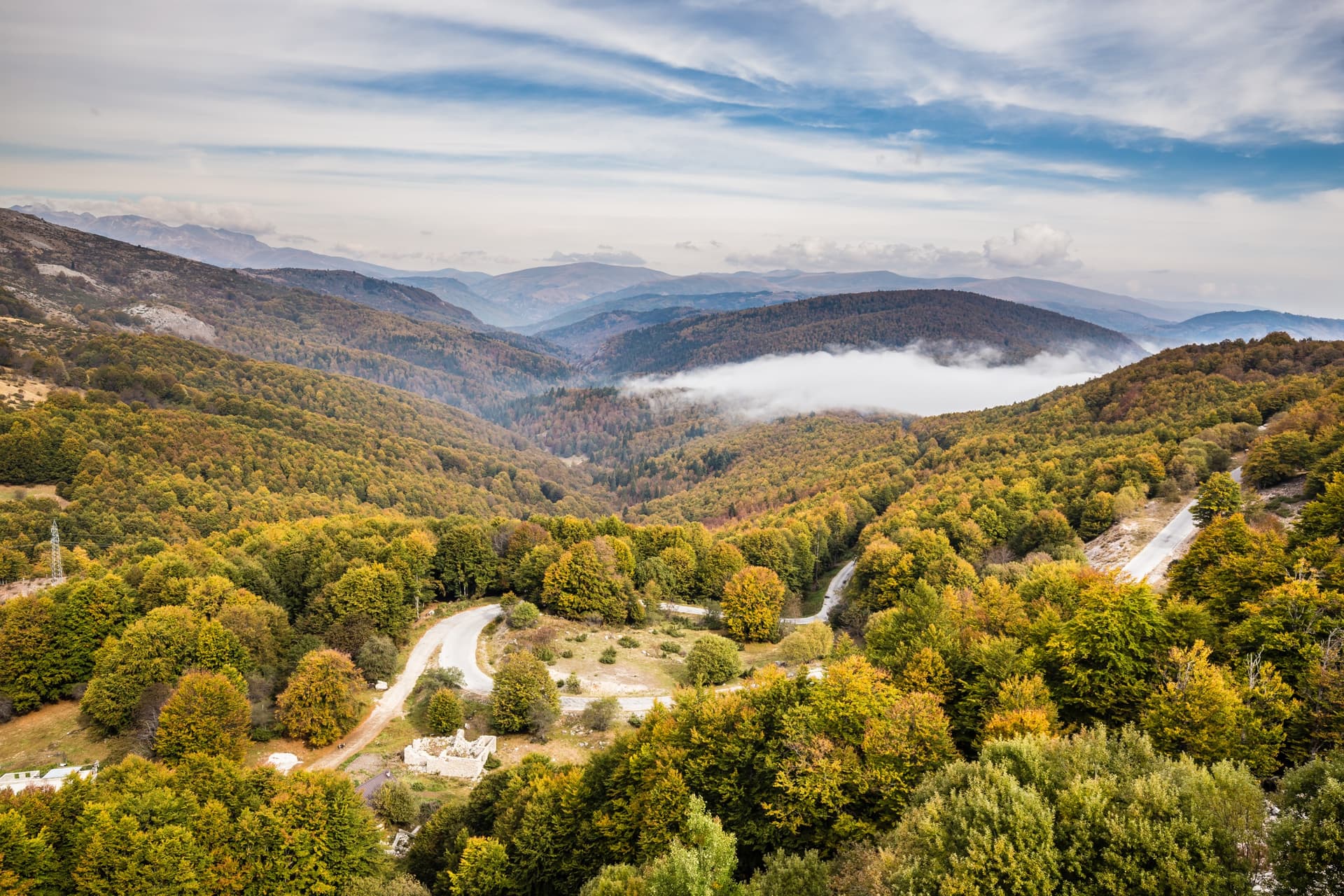
The terrain is dominated by the Korab, Desat and Bistra massifs, the south-western foothills of the Šar mountains and the northern part of Krčin. Several peaks exceed 2,000 metres, with Mount Korab (2,764 m) leading the way. Forests, primarily beech, cover a third of the park; above them stretch alpine pastures.
Botanical richness is notable: over 1,300 species of herbaceous plants and 145 tree species, of which approximately 40% are relict or endemic. On the fauna side, there are over 140 bird species, including the imperial eagle, golden eagle, saker falcon, pallid harrier and boreal owl. Large mammals present include the brown bear, lynx, grey wolf, red deer, red fox and wild goat. Wildcats and Eurasian otters complete the picture.
Saint John Bigorski Monastery
Perched on the slopes of Mount Bistra, in the Radika river valley, between Gostivar and Debar, the Saint John Bigorski monastery is the most visited religious building in the park. Tradition dates its foundation to 1020/21, though historians continue to debate this dating. The church preserves frescoes signed by several generations of painters and, above all, a carved wooden iconostasis considered one of the most remarkable in the Balkan Orthodox world.
Saint George the Victorious Monastery
Located in the village of Rajchica, overlooking Lake Debar, this monastery was rebuilt in 1835 on the ruins of an 11th-century church. It has been occupied by a community of nuns since 1999. According to tradition, it houses a fragment of the True Cross and a piece believed to be from the hand of Saint John — elements best received as relics of tradition rather than historical fact.
The Submerged Saint Nicholas Church
Built in 1850, Saint Nicholas Church became partially submerged following the creation of the artificial Mavrovo lake by a dam. When water levels drop, the structure emerges and offers a singular photographic vantage point over the lake. A replacement church was constructed nearby.
Elen Skok Bridge
Approximately 600 metres from Bosko Most, the Elen Skok bridge spans the Mala Reka river. Built three or four centuries ago, it is associated with a local legend that gave it its name (the «deer's leap»).
The caves
The limestone bedrock of Mount Bistra harbours several notable cavities:
- Alilica Cave, near the Tresonechka river: two chambers, Gorna and Dolna, connected by a vertical shaft. The lower chamber extends for 600 metres and contains an underground river and waterfall.
- Sharkova Dupka Cave, discovered roughly thirty years ago and named after Sako, its first explorer. The bottom lies 20 metres underground, accessible by a semi-circular staircase.
Duf Waterfall
Located approximately 30 minutes' walk from the centre of the village of Rostoucha, the Duf waterfall is reached via a trail that traverses a canyon reaching 60 metres in height. A refreshing stop in summer.
Galicnik and Lazaropole
Galicnik, 10 km from Mavrovo lake, preserves remarkable stone architecture. The village hosts on 12 July the Galichka Svadba, a traditional public wedding that reenacts local nuptial customs before visitors. Lazaropole, at 1,350 metres altitude on the Mount Bistra plateau, ranks among the country's highest villages and offers a solid base for hikes on Bistra.
Activities and practical information
The park suits a wide range of activities depending on season:
- hiking and trekking (network of marked trails on Bistra and towards Korab),
- mountain biking and cycle touring,
- climbing on limestone cliffs,
- fishing in the lake and rivers (permit required),
- horse riding around villages,
- alpine and cross-country skiing at Mavrovo resort in winter.
The tourist information centre, located in the village of Mavrovi Anovi, issues permits necessary for certain activities and supplies trail maps. It is a worthwhile stop before any independent exploration, particularly since strictly protected zones are not all freely accessible.
When to visit
The park is accessible year-round, with distinct seasonal uses:
- May to October: hiking, mountain biking, monastery and village visits, lake swimming.
- June to September: ascents towards Korab and Bistra peaks, stable conditions.
- December to March: skiing at Mavrovo resort, snowy landscapes around the lake.
12 July is worth noting if you wish to witness Galicnik's traditional wedding.
How to get there
From Skopje, allow approximately 1.5 hours by car via the M-4 then R-1202 towards Mavrovi Anovi: this is the most straightforward access. Buses also connect Skopje to Mavrovo and Debar, with more limited frequency at weekends. For multi-leg journeys, the park logically fits between Skopje and Lake Ohrid via Debar, or in a loop towards Kosovo via Mavrovo Pass.
A car remains the most practical option for reaching remote villages (Galicnik, Lazaropole) and less-served sites like Duf Waterfall.
Nearby
The park lends itself to a regional circuit in the western Balkans. To extend your discovery, several sites are accessible within reasonable distance:
- The Germenj National Park, another mountainous protected area on the Albanian side.
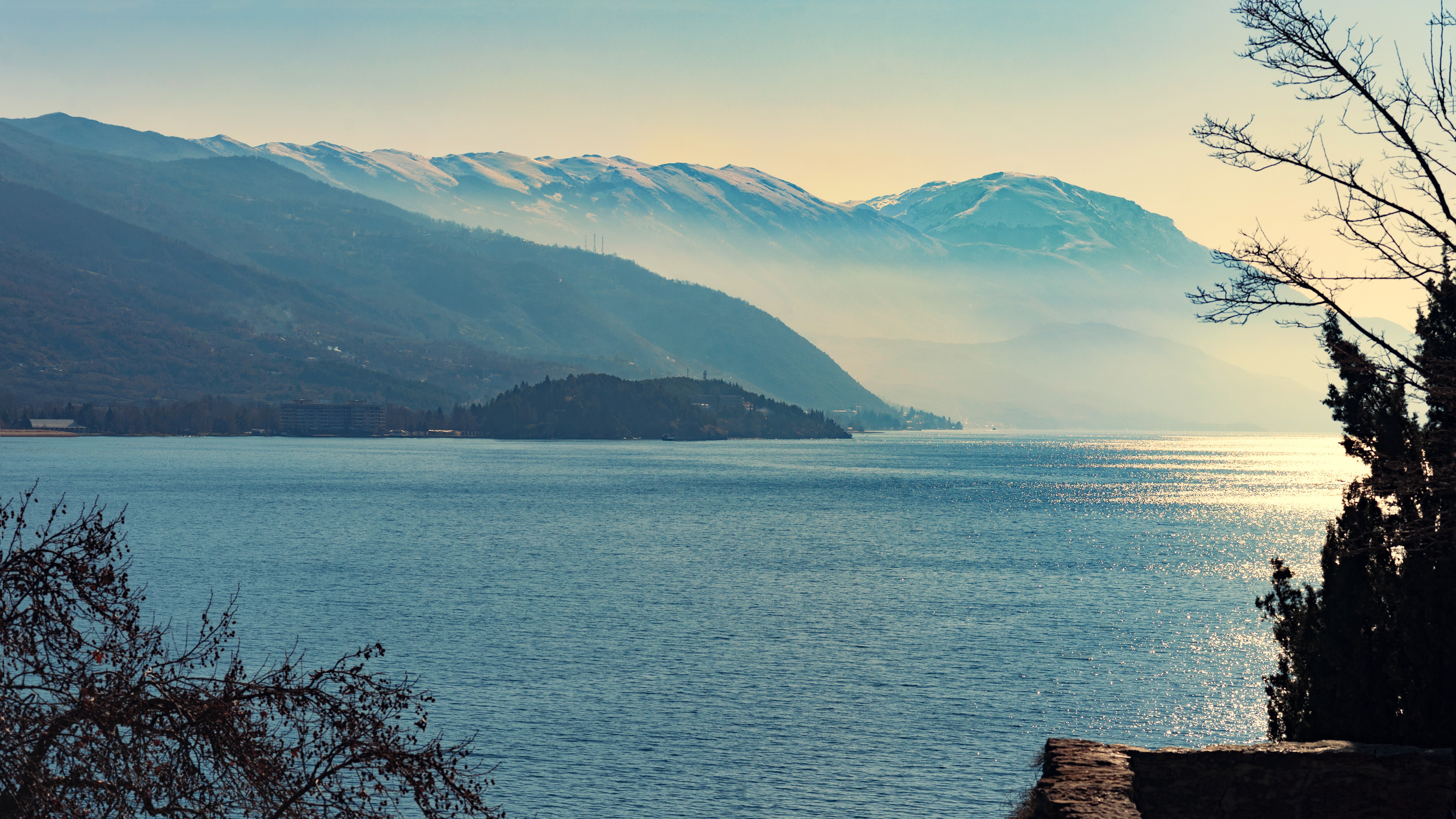
- Lake Radoniqi, in the same vein of lacustrine landscapes.
- Rozafa Castle, for a strong heritage component.
- The National History Museum of Tirana, to place the region in its Balkan context.
Frequently asked questions
Frequently asked questions
In North Macedonia, in the west of the country, approximately one and a half hours' drive from Skopje. The welcome centre is located in the village of Mavrovi Anovi.
One day allows you to see the lake, Saint John Bigorski Monastery and a village. To combine hiking, caves and traditional villages, allow 2 to 3 days on site.
Marked trails in the tourist zone are freely accessible. However, certain activities (fishing, access to managed reserves) require a permit issued at the Mavrovi Anovi information centre.
Yes, Saint John Bigorski and Saint George the Victorious are open to visitors, respecting monastic rules (modest dress, silence in church). Bigorski's iconostasis alone warrants the visit.
Yes, Mavrovo ski resort operates from December to March and remains one of the country's major resorts. High-altitude villages are however little accessible in this season.
Plan your trip
Mavrovo National Park fits naturally into a Balkan itinerary connecting North Macedonia, Albania and Kosovo. To structure your stay around these mountain landscapes and Orthodox heritage, consult our ideas for travel to Albania and the region.
Nearby
Interested in this visit?
We can include it in your personalised itinerary.