Lake Ohrid
Lake Ohrid
On the Albanian shore of Lake Ohrid, around Pogradec: a UNESCO lake spanning 2 to 5 million years old, endemic fauna and a major Neolithic archaeological site.
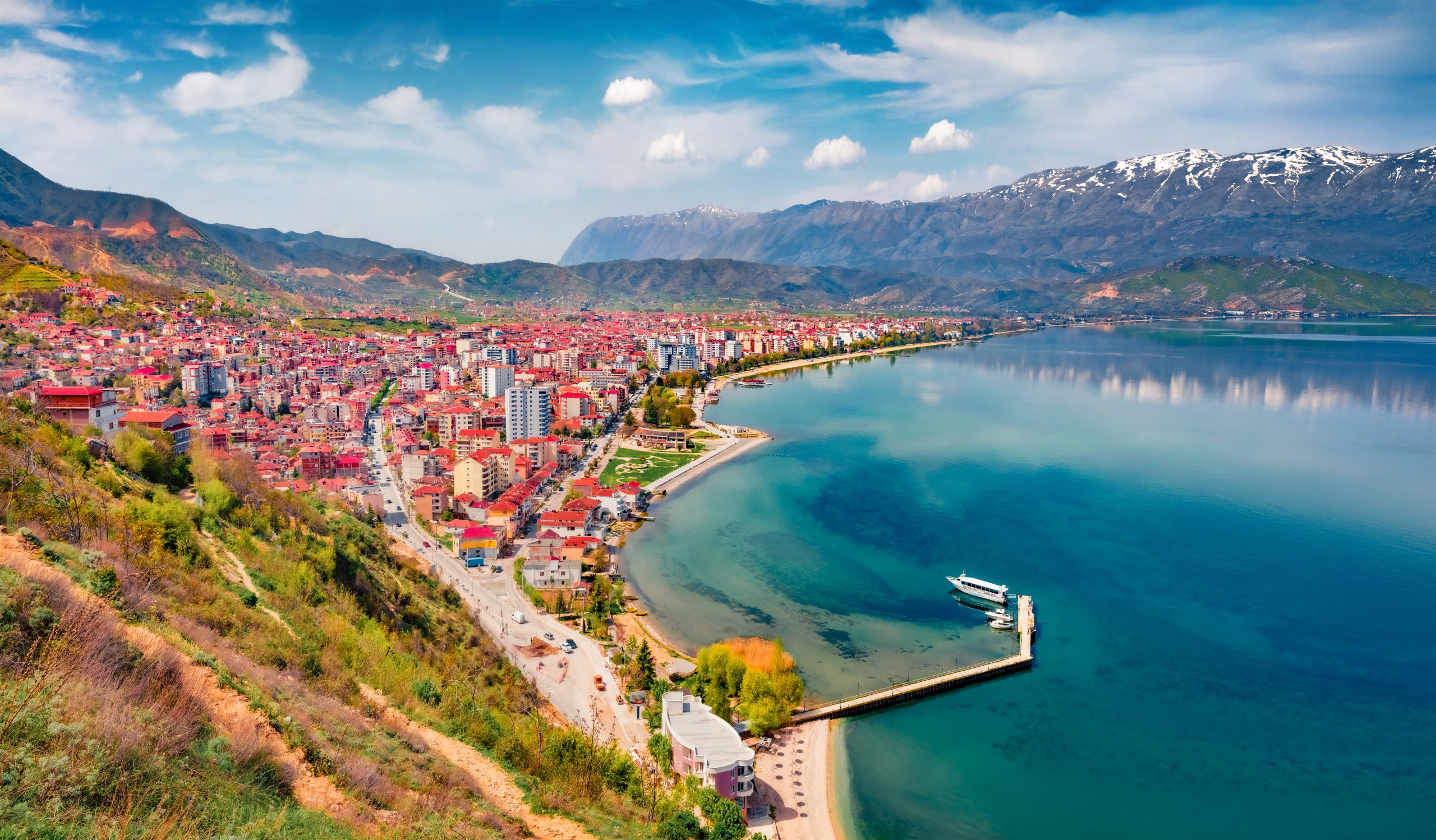
Straddling Albanie and North Macedonia, Lake Ohrid ranks among the world's oldest lakes. On the Albanian side, it borders the town of Pogradec and represents roughly one third of the water body. Inscribed as a UNESCO World Heritage site since 1980, it combines exceptional geological interest, endemic biodiversity and major archaeological remains.
Why visit Lake Ohrid
Three main reasons motivate a detour to Pogradec and its shores:
- A lake of exceptional geological age: estimated between 2 and 5 million years old, it belongs to the exclusive circle of ancient lakes, alongside Baikal or Tanganyika.
- Endemic biodiversity recognised by UNESCO: approximately 1,200 animal species recorded, of which 212 are endemic.
- A world-class archaeological site: the discovery in 2023 of a Neolithic pile-dwelling village has rekindled scientific interest in the Albanian shore.
The lake covers 358 km² and reaches nearly 288 metres in depth. On the Albanian side, it is organised around Pogradec, with public beaches, riverside villages and a landscaped park (Drilon) in the immediate vicinity.
History and heritage
The lake shores have been occupied since the Bronze Age. The city of Ohrid, on the Macedonian shore, became a leading Slavic religious centre during the medieval period. On the Albanian side, Pogradec long played a commercial crossroads role between the Adriatic and the interior of the Balkans.
In 2023, a team of Swiss and Albanian archaeologists uncovered the remains of a Neolithic pile-dwelling village submerged near the shoreline. The site yielded approximately 100,000 oak wooden stakes, presumably arranged in a defensive palisade around the settlement. Datings place the occupation between 6000 and 5800 BCE, for a community estimated at 200-500 inhabitants. Researchers suggest it could be the oldest known city in Europe, a hypothesis that remains to be confirmed by ongoing research.
About twenty kilometres from Pogradec, the village of Lin preserves the ruins of a Paleo-Christian basilica and figures among the region's oldest inhabited sites.
What to see and do
Singular fauna and flora
The lake is sometimes called a "museum of living fossils". It is home to notably Gocea ohridana, a gastropod whose lineage dates back approximately 30 million years. Between 6 and 15 metres depth, the hara algae forms characteristic seagrass beds. On the fish side, two emblematic species structure local fishing: the Ohrid trout (tave korani) and the belvica, both endemic and sensitive to overfishing.
The shores welcome varied birdlife: pelicans, swans, ducks, herons. Nearby forest massifs shelter oak, chestnut and hazel trees.
Water activities
Tushemisht beach, near Pogradec, is one of the most frequented bathing spots in season. Kayaking and canoeing allow exploring coves and fishing hamlets. Motor boat rental is available in Pogradec and several neighbouring villages.
Hiking and nature
The reliefs overlooking the lake offer several half-day trails with views over the water body. Drilon park, a few kilometres from Pogradec, features pools fed by karstic springs and a network of shaded paths, suitable for family walks.
Local cuisine
Lakeside restaurants highlight grilled koran trout. On the Albanian dining side, you'll also find byrek (savoury pastry) and fërgesë (a preparation based on peppers, tomatoes and fresh cheese). Pogradec markets offer cheeses, charcuterie and regional produce.
When to go
From June to September, temperatures allow swimming and water activities, with peak crowds in July-August. May and early October offer a good compromise for hiking and photography, with more measured visitor numbers. Winter is cold and windy; lakeside accommodation operates at reduced capacity, though watching migratory birds gains in interest.
Practical information
- Visit duration: allow one day for Pogradec and surroundings, two to three days to combine Lin, Drilon and a water excursion.
- Budget: dining and accommodation remain moderate compared to the rest of the Balkans.
- Swimming: public beaches are free, sun loungers paid in developed sections.
- Site respect: the lake faces environmental pressures (eutrophication, overfishing, uncontrolled urbanisation). Favour operators and restaurants committed to responsible fishing.
How to get there
Pogradec is the main entry point to the lake on the Albanian side. From Tirana, allow approximately 3 to 4 hours of driving via Elbasan and the SH3. Buses and minibuses (furgon) connect the two cities daily. From Korçë, the journey takes around one hour. Crossing the border to Ohrid (North Macedonia) is possible at the Tushemisht/Sveti Naum and Qafë Thanë checkpoints.
Nearby
Several sites complement a stop around the lake:
- The town of Pogradec, logistics and cultural hub.
- The Korçë archaeology museum, approximately 40 km away, which contextualises regional discoveries.
- The Germenj-Shelegur national park, for a nature extension to the south-east.
- For lovers of lacustrine landscapes, Lake Koman to the north and Lake Shkodra offer very different atmospheres.
Frequently asked questions
Frequently asked questions
Preparing your trip
Lake Ohrid fits naturally into an itinerary in south-eastern Albanie, between Korçë, Berat and the Ionian coast. To build a coherent route, consult our travel suggestions in Albanie.
Interested in this visit?
We can include it in your personalised itinerary.