Butrint
Butrint
UNESCO site south of Saranda, Butrint layers 2,500 years of history between lagoon and hills. Tips, rates and access from Corfu.
Arrive at Butrint early in the morning, before the crowds, to witness a timeless scene. As the first rays of sunlight strike the rocks, the weathered walls of the abandoned city reveal secrets of ancient lives. Located just under 20 km south of Saranda, Butrint is an ancient city steeped in romance and beauty—an unmissable stop on any journey through Albania.
The History of Butrint
Origins
Butrint's earliest settlements date back to the late Bronze Age. The site likely remained a small fishing hamlet during the Dark Ages. The Chaonians, a Greek tribe from Epirus, founded the city in the mid-7th century. They built a fortress on a hill and gave it the name Buthrotum. The Romans seized the city in 167 BC, before it passed to the Byzantine Empire, followed by the Venetian Republic in centuries to come. During the Middle Ages, inhabitants gradually abandoned the city due to surrounding marshlands.
Archaeological Discoveries at Butrint
In 1928, Benito Mussolini's fascist government launched the first archaeological expedition to Butrint to assert Italian supremacy in the region. The excavations were directed by Italian archaeologist Luigi Maria Ugolini who, despite the political intentions behind the mission, conducted his work with scholarly rigor. Digging continued after his death in 1936 until 1943 and into World War II.
When Enver Hoxha came to power in 1944, Albania's communist government banned foreign archaeological expeditions in the country. Work was conducted exclusively by Albanian scientists, including Hasan Ceka. Soviet leader Nikita Khrushchev explored the ruins in 1959 and proposed to Hoxha the idea of building a submarine base there. In the 1970s, the Albanian Institute of Archaeology undertook more extensive research. The Butrint Foundation of Lord Rothschild, based in the United Kingdom, supported the project from 1993 onward.
After communism's collapse in Albania in 1992, the newly democratic government planned major works at Buthrotum. Following the country's political and economic crisis in 1997, UNESCO designated the site as part of the World Heritage in Danger list due to looting and lack of site protection.
Butrint in Literature
Virgil, in his masterwork the Aeneid, mentions the ancient gates of the city of Buthrotum, which Aeneas compares to the Scaean gates of Troy. Buthrotum is also the seat of Pyrrhus's Palace, where Racine depicts his tragedy Andromaque.
Butrint Today
Butrint, formerly known as Buthrotum, lies about 2 km from the eastern shore of the strait separating Corfu from the mainland. Ruins spanning 2,500 years are nestled within the beautiful natural setting of the Butrint National Park.
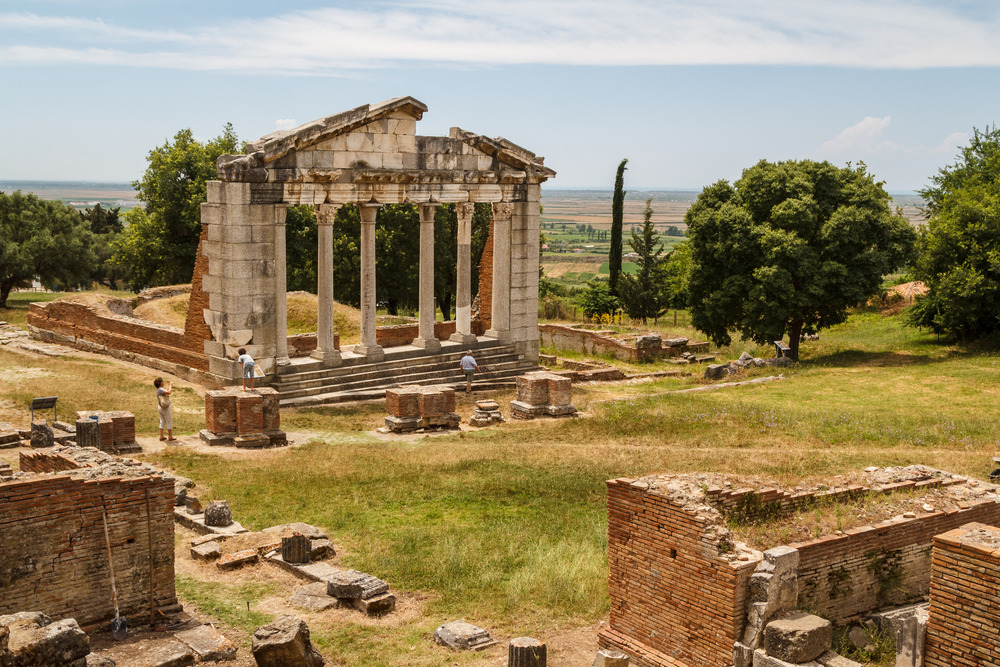
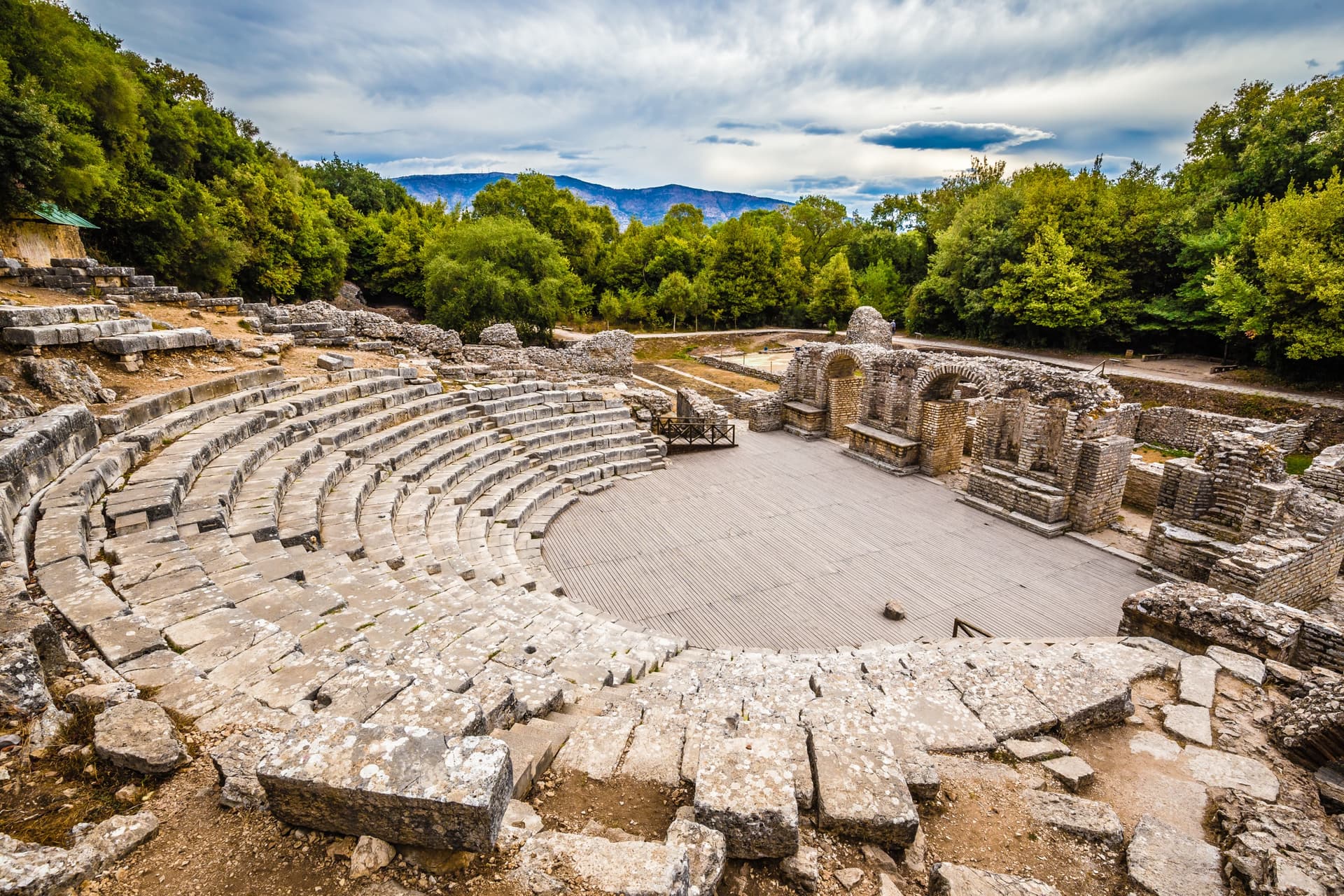
Remains uncovered after World War II include Roman pools, a theatre, a chapel dating from the 5th century, and a basilica from the 6th century. The Lion Gate and the Scaean Gate are absolute must-sees during your visit to the Buthrotum archaeological site. Excavations conducted between 1994 and 1999 unearthed Roman villas and a Early Christian church. The medieval fortress built in the 14th century now serves as a museum.
Just east of Butrint lies the old Lake Palodes, where mussels and fish abound. The body of water is connected to the Corfu strait via the Vivari Canal. North of the city, the Poseidium Peninsula stretches about 5 km and nearly touches the mainland at a place called Dema.
Butrint is connected to Saranda by a road built in 1959 to mark Soviet leader Nikita Khrushchev's visit. The route was renovated in summer 2010 to address criticism over the project's environmental impact, which could have threatened Butrint's UNESCO World Heritage status. Numerous tourists visit the ancient city from the Greek island of Corfu off the coast of Saranda. Daily ferries shuttle between Corfu's port and Saranda, where in addition to public bus service, charter coaches are available to transport visitors to the Butrint archaeological complex. Hydrofoils also operate between Corfu and Saranda.
The Buthrotum archaeological site is best explored on foot. Plan for about two hours to cover the entire complex and nearby attractions within Butrint National Park.
What to Do
- Photograph yourself beneath the Lion Gate
- Explore the ancient Roman villas
- Visit the museum housed in the medieval fortress
- Explore Butrint National Park
- Take a boat ride along the Vivari Canal, and more
Want to discover this destination?
Our local advisors design your tailor-made trip.