LOCK
LOCK
The Kulla e ngujimit of Theth, one of Albania's last isolation towers, bears witness to the Kanun, the customary code of the Albanian Alps.
The Lock-in Tower of Theth, locally known as Kulla e ngujimit, stands among the last isolation towers still standing in Albanie. Located in the village of Theth, in the heart of the Albanian Alps, it bears witness to the Kanun, the customary code that once governed social life in the country's north.
Why visit the Lock-in Tower of Theth
The tower captivates both through its defensive architecture and the history it tells: that of a customary judicial system where murderers would seclude themselves to escape retaliation. Its visit pairs easily with the village of Theth and its natural sites (Grunas canyon, Theth waterfall), set amid pristine high-altitude scenery.
History and tradition of the Kanun
Lock-in towers, found throughout northern Albanie and more broadly across the Balkans, served as refuges for men caught in blood feuds. The practice was governed by the Kanun, a body of customary rules attributed to Lekë Dukagjin, which notably codified the management of shed blood.
According to these rules, the killer had to remain secluded until the victim's family granted pardon, or until one of the killer's relatives was executed in compensation. Punishment applied to both men and women; children were exempt. A period of isolation could last several months, sometimes several years.
Many of these towers were destroyed during the reign of King Zog, as part of a modernization policy aimed at dismantling clan structures. Under the communist regime that followed, the few remaining towers were often repurposed as barns. The one in Theth is among the best-preserved examples.
What to see on site
Tower architecture
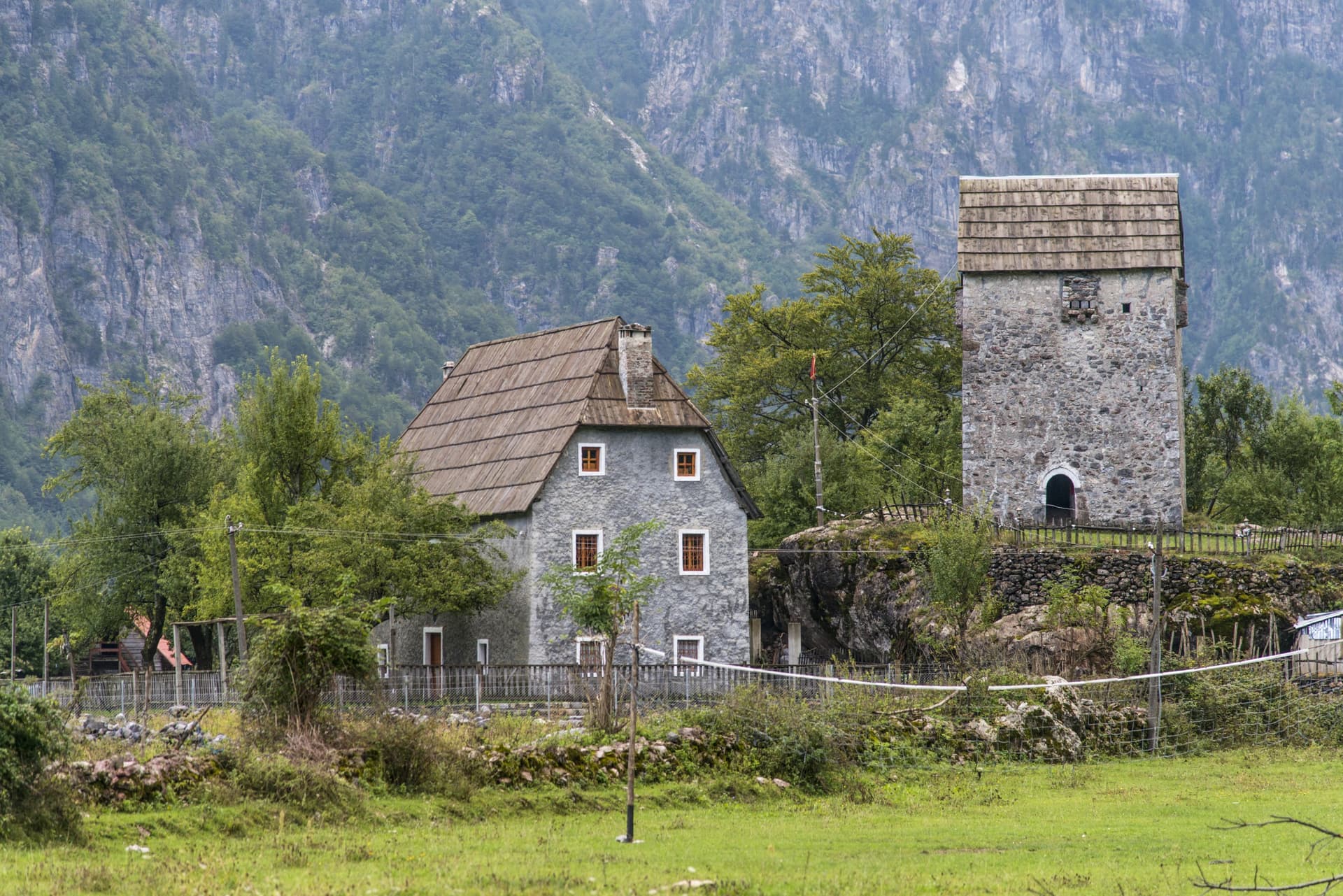
The Kulla e ngujimit stands southwest of the hamlet, on the banks of the Theth River, near the stone church. The structure is built of rough stone, with a single entrance on the ground floor. The interior is organized over several levels connected by a ladder, which the occupant would pull up behind them once they climbed.
On the upper floors, narrow openings allowed surveillance of the surroundings. Other holes, angled downward along the walls, were used to shoot at anyone attempting to approach. The ground floor today features sparse furnishings and a few old photographs, offering insight into the daily life of those confined.
The village of Theth
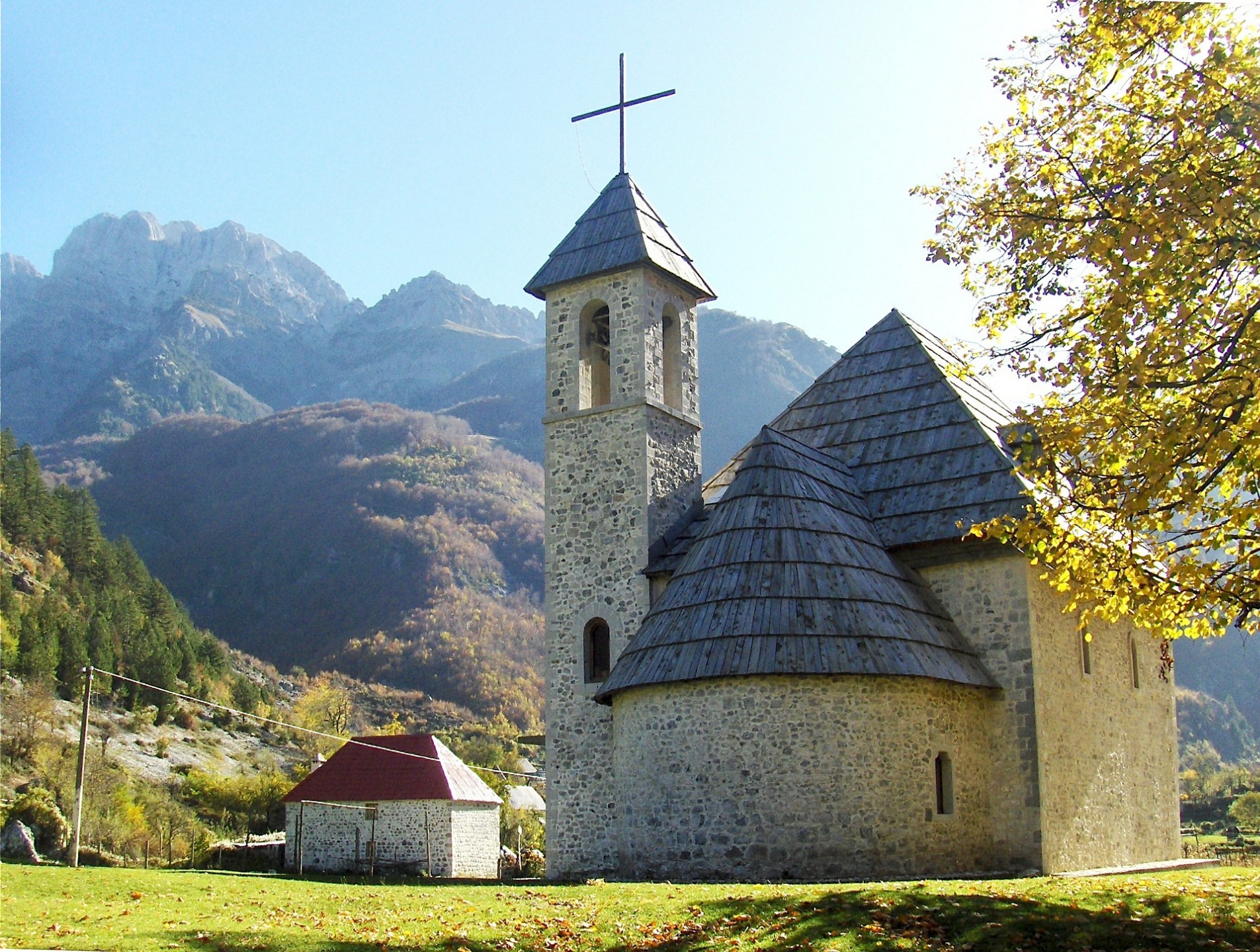
Beyond the tower, the hamlet preserves several buildings of interest: the Dukagjin Ethnographic Museum, the house of Lulash Keci, as well as the old stone church, one of the village's visual landmarks. Set aside half a day to explore the main sights of the town on foot.
Surrounding natural sites
- Grunas Canyon: a gorge roughly 2 km long, accessible via a marked trail from the village.
- Theth Waterfall: a fall of about 25 m high, one of the valley's highlights.
- Bloja Mill: an old water mill still in place.
- Bira e Rratheve and Harapi Caves: karst cavities with galleries and underground lakes.
Practical information
The tower can be visited during the day, mainly during the tourist season. Admission is charged but remains moderate; an additional fee may apply for photography. Details change year to year, so it's best to inquire on-site or with your accommodation.
Allow approximately 30 to 45 minutes for the tower visit alone. The terrain is rocky: wear closed-toe shoes.
When to visit
High season runs from June to September: the access road is clear, hiking trails are passable, and all accommodations are open. In winter, Theth receives snow regularly (unlike many other Albanian regions) and access becomes difficult, even impossible without a suitable vehicle. Spring and autumn offer intermediate conditions, depending on the weather.
How to get there
The most common route passes through Shkodër, which has daily bus connections to Tirana. From Montenegro, you can reach Shkodër via the Muriqan border crossing.
- From Shkodër to Koplik: approximately 20 minutes by car.
- From Koplik to Theth: approximately 1 hour 20 minutes via SH21, a winding mountain road for which a 4x4 is recommended.
- Car rentals and seasonal shuttles are available in Shkodër and Tirana.
Experienced hikers can also reach Theth from the Valbona Valley via a mountain trail, with approximately 8 hours of walking: a demanding trek in terms of elevation gain, best reserved for experienced, well-equipped walkers.
Nearby attractions
If you extend your stay in Albanie, several sites complement a cultural and natural itinerary:
- The Karaburun Peninsula, on the Adriatic coast.
- Saint Naum Monastery, near Lake Ohrid.
- The Korçë Archaeology Museum.
- Germenj-Shelegur National Park.
FAQ
Frequently asked questions
Plan your trip
The Lock-in Tower of Theth fits naturally into a circuit around the Albanian Alps, combining hiking, traditional villages, and customary heritage. To build a custom itinerary, consult our Albanie travel guide.
Interested in this visit?
We can include it in your personalised itinerary.