Porto Palermo Castle
Porto Palermo Castle
Perched on a peninsula along the Ionian coast near Himarë, the Porto Palermo fortress combines distinctive military architecture with a bay ideal for swimming.
Set on a peninsula connected to the mainland by a narrow strip of sand, the Porto Palermo fortress overlooks a bay on the Ionian coast, near Himarë. Also known as Ali Pacha's Castle, it bears traces of a layered past: an ancient waypoint, possible Venetian heritage, Ottoman fortification, and communist-era military base. A dense site where history and landscape converge within a few hectares.
Why visit Porto Palermo
The castle stands out for its triangular silhouette and pentagonal towers, uncommon in the region. Its appeal extends beyond military architecture: it also serves as a natural vantage point over the bay, one of the most sheltered bodies of water along the Albanian coast. The visit thus combines historical narrative with a maritime setting, without the crowds found at more famous sites in the country's south.
- A coastal fortress in good condition, freely accessible
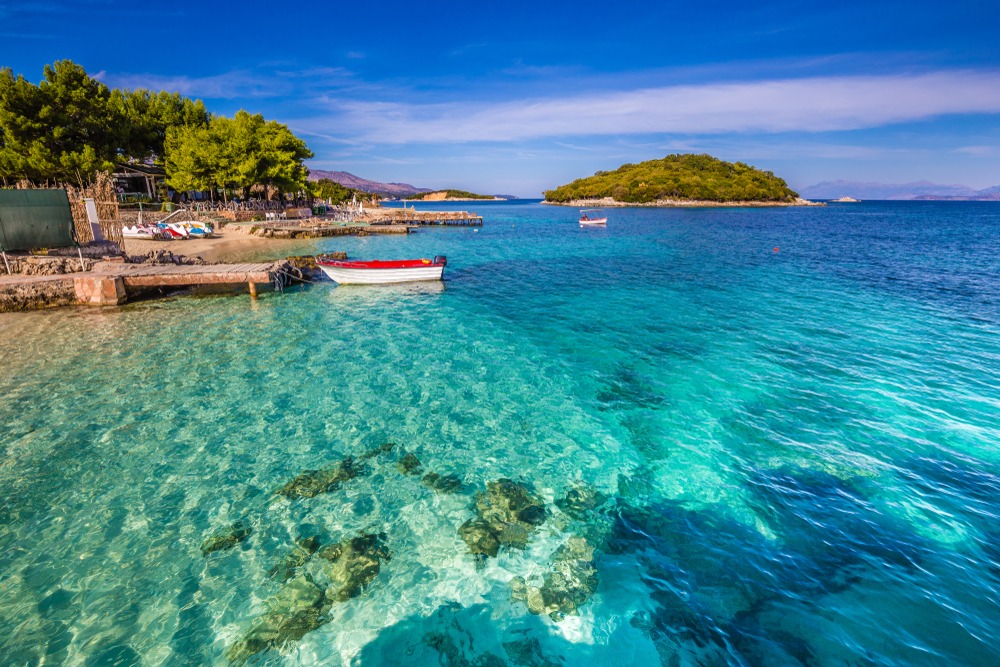
- A sheltered bay suited for summer swimming
- 20th-century military remnants visible from the ramparts (submarine tunnel, naval station)
- A logical stop on the route between Vlorë and Saranda
A history in layers
Origins: between antiquity, Venice, and Ali Pacha
In antiquity, the bay was known in Greek as Panormos, translated as "Panorma Bay." It already served as a port defending Himara against raids. The current name, Porto Palermo, dates to the Byzantine era, a reference to Palermo in Sicily.
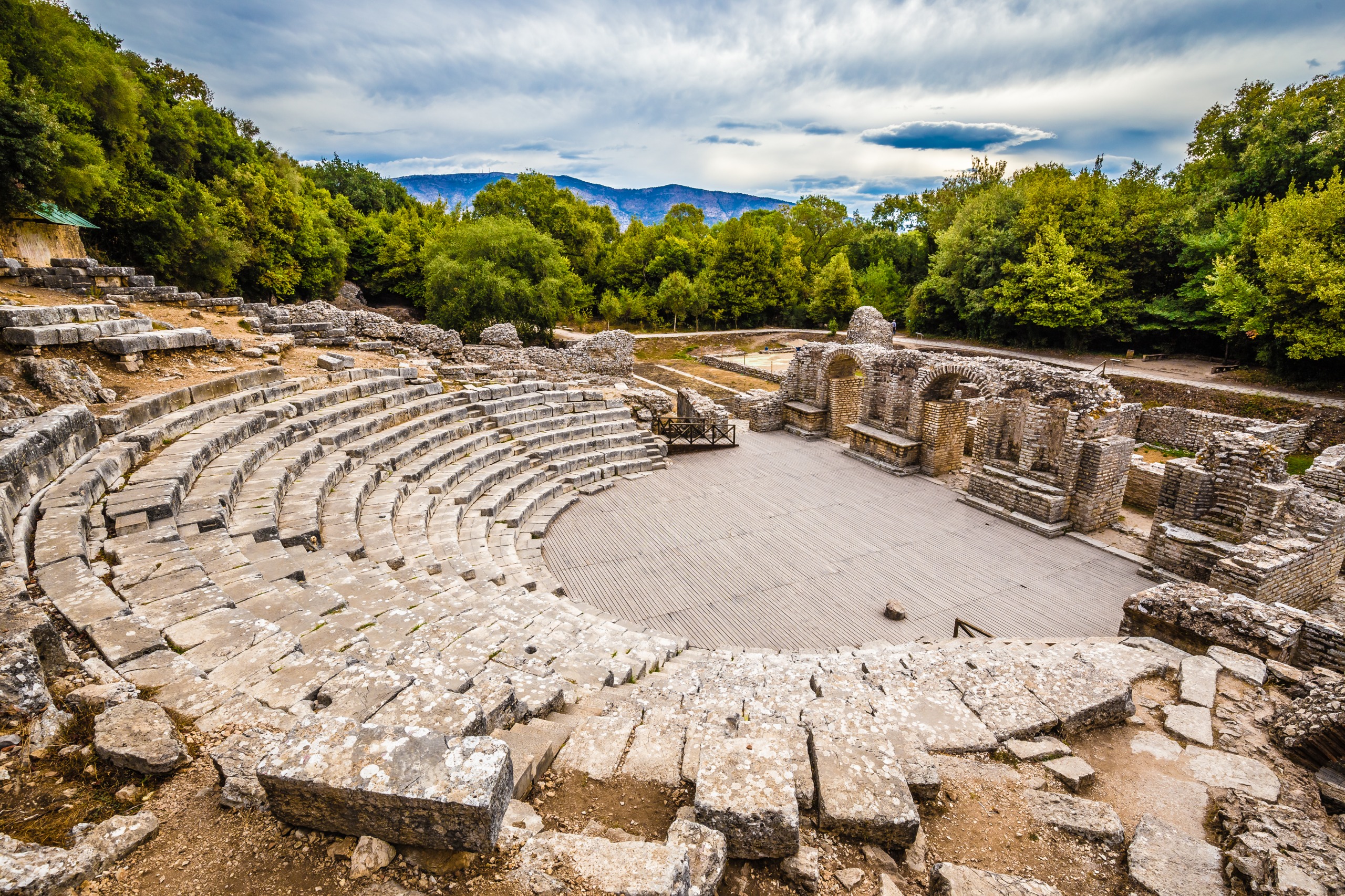
The castle's precise origin remains debated. It is often attributed to Ali Pacha of Tepelena, an influential Ottoman governor in the late 18th and early 19th centuries. However, several clues suggest an earlier foundation, possibly Venetian: a plaque bearing the Lion of Saint Mark once crowned the entrance, removed only decades ago. The triangular form and round towers echo the Venetian castle of Butrint. Some scholars also note that the location, exposed to surrounding heights, would have made little sense in the age of artillery: construction predating cannons is plausible.
Another theory holds that the lost plaque bore an inscription: "Ali Pacha of Tepelena built the castle in 1804 with the aid of French military engineers." Local legend adds that these engineers were executed upon completion to preserve the fortress's secrets. In any case, Ali Pacha is closely tied to the site: he fortified the bay to secure the maritime route between Himarë and Saranda, before later granting the port and castle to the royal navy.
Military base in the 20th century
During and after World War II, the fortress served as a military base and prison. Under communist rule, the bay became a strategic zone: a tunnel about 600 meters long was excavated to shelter submarines, and a naval station was built to the north, still owned by the Albanian navy today. The castle itself was declared a cultural monument in 1948.
What to see on-site
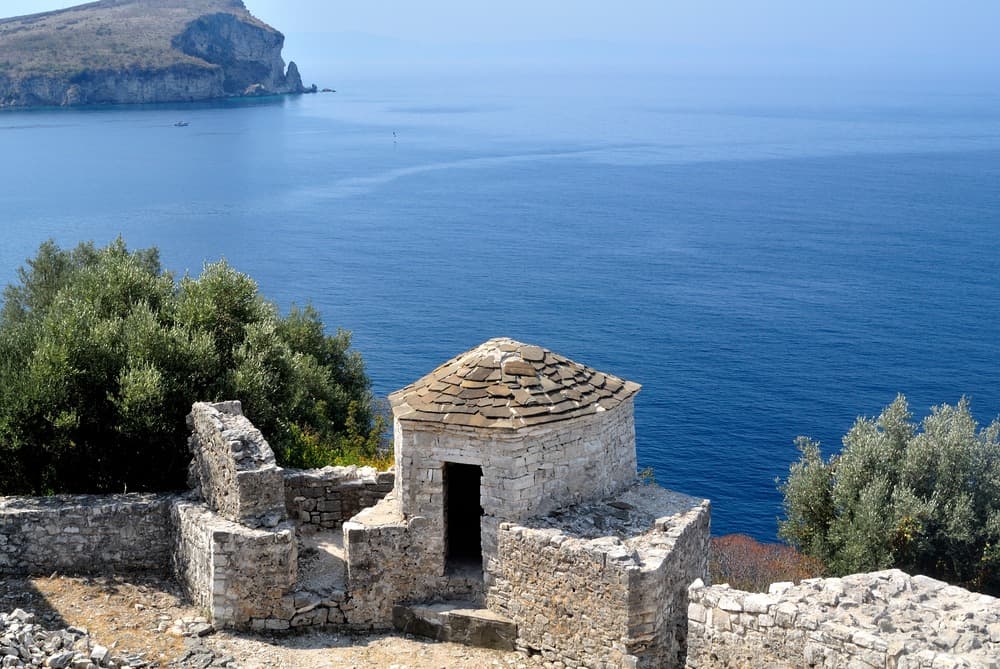
The enclosure adopts a rare triangular form, with walls of stacked stone blocks, 3.2 to 3.5 meters thick and reaching nearly 20 meters in height in places. At each of the three angles stand pentagonal towers of limestone. On the terrace, five observation towers topped with domes retain their cannon openings.
Inside, several vaulted rooms served as quarters for soldiers and officers. A painting depicting Ali Pacha is notably visible. On the ground floor, one room was used as a prison cell. Other rooms, more austere, functioned as stores for military supplies.
From the ramparts, the view sweeps across the entire bay. The entrance to the communist-era submarine tunnel is clearly visible, as is the naval station to the north. Visitors move freely within the enclosure, making the visit quite open-ended, without a rigid designated path.
Practical information
- Visit duration: allow 45 minutes to 1.5 hours depending on your pace and time spent on the ramparts.
- Entry fee: paid admission at a moderate rate; check access conditions on-site, as they may vary by season.
- Site access: from the parking area, a strip of sand leads to the peninsula; the walk is short but can be windy.
- What to bring: closed-toe shoes (rocky, uneven ground), water, hat; little shade on the ramparts.
- Swimming: the adjacent beach allows you to combine a site visit with a swim in summer.
When to visit
The most pleasant period runs from May through early October, when the Ionian Sea is suited for swimming and light enhances the bay's beauty. July and August see peak crowds and heat; May–June and September offer better balance between temperature, still-warm water, and manageable crowds. Outside the season, a visit remains possible but the coast empties out, and certain services (boat rentals, nearby restaurants) operate at reduced capacity.
How to get there
The castle sits on the SH8 coastal road between Vlorë and Saranda, near Himarë. Several options:
- By car: the most flexible option, with parking available along the road at the bay level.
- By minibus (furgon): regular connections between Saranda, Himarë, and Vlorë serve the bay; ask the driver to stop at Porto Palermo.
- By boat: excursions departing from Himarë or Saranda offer a sea approach, providing a different perspective on the coastal architecture.
Nearby attractions
Porto Palermo Bay fits into a rich itinerary of southern Albanie. Nearby, the Himara Castle overlooks the old town and offers another perspective on the coast's defensive history. Further south, the Ali Pacha Castle in Tepelena completes the story of the renowned Ottoman governor's rule. For altitude views, Mount Gjerë opens onto drier, mineral panoramas. For nature lovers, Germenj-Shelegur National Park and Farma Sotira allow you to venture further into the mountainous interior.
FAQ
Frequently asked questions
Attribution remains uncertain. The site is traditionally linked to Ali Pacha of Tepelena, who is said to have fortified it around 1804 with the help of French military engineers. However, several clues—including the plaque bearing the Lion of Saint Mark removed decades ago and resemblance to the Venetian castle of Butrint—suggest an earlier, possibly Venetian foundation.
Plan for an average of 45 minutes to 1.5 hours. The visit is self-guided, allowing you to explore the vaulted rooms, terrace, and observation towers. If you combine it with a swim in the bay, set aside a half-day.
Yes. The bay is sheltered, and the beach adjacent to the castle is ideal for swimming, especially between late May and early October. The area is also excellent for snorkeling and boat excursions.
The tunnel, approximately 600 meters long and excavated during communist rule, is visible from the castle's ramparts. Access is partly regulated because the adjacent naval station still belongs to the Albanian navy. Inquire locally—some guided boat tours allow you to approach the entrance from the sea side.
Plan your trip
Porto Palermo Castle fits naturally into a journey along the Albanian Riviera, between Vlorë, Himarë, and Saranda. To design a bespoke itinerary combining this site with Ionian coast villages and the mountain interior, explore our trips to Albanie.
Nearby
Interested in this visit?
We can include it in your personalised itinerary.